Weekly Breaking Pain Research Updates

Weekly Breaking Pain Research Updates

Weekly Breaking Research Updates

Scientific breakthroughs happen every day!  In an effort to help our patients stay up to speed on the most cutting edge treatment options available for them, our scientists monitor current research and publish weekly research updates.  The title of each article below is a link to the full study report.  If you’d like to make an appointment with Dr. Hanna to discuss your treatment options, please contact us.

Ketamine

Ketamine Derivatives

JW Sleigh, WA Denny, J Jose, SA Gamage, MG Harvey… – US Patent 20,150,259,277, 2015

Abstract: The present invention relates to ketamine derivatives of the formula (I),

pharmaceutical compositions comprising them, and methods for treating pain comprising

administering them, and their use in the manufacture of medicaments for treating pain.

Comparing the hemodynamic parameters and seizure duration between ketamine and thiopental during Electroconvulsive therapy in patients with Major depressive …

M Mohseni, A Ghanbari, MA Motazedi Ghajar… – Anesthesiology and Pain, 2015

Aim and Background: Today the effect of Electroconvulsive therapy (ECT) in cure of Major

depressive disease (MDD), and psychiatric patients is well accepted and usage of this

method is developed every day. In this regard, selecting the most effective hypnotic drugs

The antinociceptive efficacy of morphine-ketamine-magnesium combination is influenced by the order of medication administration.

SM Vučkovič, VKR Savič, DP Srebro, BM Medič… – European review for …, 2015

OBJECTIVE: Ketamine and magnesium, both N-methyl-D-aspartate (NMDA) receptor

antagonists, enhance the antinociceptive effects of opioid analgesics in different animal

models of pain, as well as in humans. This study aimed at evaluating whether magnesium

[HTML] Hemodynamic Effects of the Non-Peptidic Angiotensin-(1-7) Agonist AVE0991 in Liver Cirrhosis

S Klein, CB Herath, R Schierwagen, J Grace… – PLOS ONE, 2015

Cholestatic model. BDL was performed in 40 rats (180g) after anesthesia with ketamine/xylazine

(78mg/kg and 10mg/kg body weight) as previously described [12]. Briefly rats were anesthetized

with ketamine/xylazine (78mg/kg and 10mg/kg body weight), respectively.

[HTML] Systemic and Cardiac Depletion of M2 Macrophage through CSF-1R Signaling Inhibition Alters Cardiac Function Post Myocardial Infarction

AL Leblond, K Klinkert, K Martin, EC Turner, AH Kumar… – PLOS ONE, 2015

Procedures were performed under anesthesia induced by ketamine (90mg/kg), xylazine

(10mg/kg) and urethane (1.25mg/kg) and analgesia by ip delivery of carprofen (5 mg/Kg). Mice

were anesthetized with ketamine (90mg/kg), xylazine (10mg/kg) and urethane (1.25mg/kg).

Morphological Pulmonary Diffusion Capacity for Oxygen of Burmese Pythons (Python molurus): a Comparison of Animals in Healthy Condition and with Different …

JM Starck, I Weimer, H Aupperle, K Müller… – Journal of Comparative …, 2015

Snakes were anaesthetized (1 mg/kg diazepam intramuscularly [i/m]; Faustan; Temmler Pharma,

Marburg, Germany, followed by 40 mg/kg ketamine hydrochloride i/m; Ketavet; Pfizer Pharma,

Berlin, Germany) and placed in the CT scanner (Brilliance CT 6; Philips, Hamburg

[PDF] Articles in PresS. Am J Physiol Lung Cell Mol Physiol (March 27, 2015). doi: 10.1152/ajplung. 00291.2014

BA MacKenzie, I Henneke, S Hezel, D Al Alam… – 2015

Mice were genotyped as described previously (3, 12, 34). 148 149 Bleomycin administration

150 10–14 week-old female mice were anaesthetized with a mixture of 0.6 µl/g Ketamine 10%

151 (100 mg/ml) and 0.3 µl/g Dormitor 10% (0.5 mg/ml) dissolved in 0.7% saline.

Anesthesia for Endoscopy

M Asakawa – Veterinary Clinics of North America: Small Animal …, 2015

26 Another study found that a combination of acepromazine and butorphanol followed by induction

with propofol had minimal effect on splenic volume, whereas medetomidine and butorphanol

as premedicants followed by ketamine and diazepam for induction were associated

[HTML] Generation and Characterization of Live Attenuated Influenza A (H7N9) Candidate Vaccine Virus Based on Russian Donor of Attenuation

S Shcherbik, N Pearce, A Balish, J Jones, S Thor… – PLOS ONE, 2015

replication in multiple organs. Anesthesia occurred through an intramuscular injection

of a ketamine-xylazine-atropine cocktail (25 mg/kg ketamine, 2 mg/kg xylazine,

and 0.05 mg/kg of atropine). For euthanasia, ferrets were

[HTML] Standardized surgical approaches to ear surgery in rats

P Li, D Ding, K Gao, R Salvi – Journal of Otology, 2015

studies using rats. 2. Anesthesia and pre-operative preparation. Health SD rats

weighing about 250 g were selected and anesthetized with intraperitoneal ketamine

(100 mg/kg) and chlorpromazine (5 mg/kg). The skin around

Radiofrequency Ablation (RFA)

Is radiofrequency ablation of lung metastases the most radical treatment?

M Zielinski, R Zaimi, P Sabatier, P Bagan – European Journal of Surgical Oncology, 2015

We read with interest the article on long term results of radiofrequency ablation (RFA) to lung

metastases from colorectal cancer 1. This article is an interesting retrospective analysis on

long term survival in patients with lung metastases from colorectal cancer treated with this

Uninterrupted new oral anticoagulants compared to uninterrupted Vitamin K antagonists in ablation of atrial fibrillation. A Meta-analysis

R Nairooz, K Ayoub, P Sardar, J Payne, A Almomani… – Canadian Journal of …, 2015

NOAC= new oral anticoagulant, VKA=vitamin K antagonist, N/A=not available, TEE=

trans-esophageal echocardiogram, ICE= intra-cardiac echocardiogram, UFH=

unfractionated heparin, s= seconds, RFA= radiofrequency ablation.

Magnetic resonance imaging of atrial fibrosis: redefining atrial fibrillation to a syndrome

P Gal, NF Marrouche – European Heart Journal, 2015

Post-ablation DE-MRI allows for assessment of the total scar burden, complete encirclement

of pulmonary veins, and the assessment of residual fibrosis, which were all reported to

be strong predictors of arrhythmia recurrences post-ablation.

Imaging Hepatocellular Carcinoma with Dynamic CT Before and After Transarterial Chemoembolization: Optimal Scan Timing of Arterial Phase

M Saake, MM Lell, A Eller, W Wuest, M Heinz, M Uder… – Academic Radiology, 2015

In eight patients previous TACE and in five patients previous radiofrequency ablation had been

performed and follow-up imaging had demonstrated HCC recurrence. First, in a part of our cohort

the HCCs had been treated previously by TACE or radiofrequency ablation.

Efficacy of Antiarrhythmic Drugs Short-Term Use After Catheter Ablation for Atrial Fibrillation (EAST-AF) trial

K Kaitani, K Inoue, A Kobori, Y Nakazawa, T Ozawa… – European Heart Journal, 2015

fasttrack ★ Efficacy of Antiarrhythmic Drugs Short-Term Use After Catheter Ablation

for Atrial Fibrillation (EAST-AF) trial. Kazuaki Kaitani, Koichi Inoue, Atsushi Kobori,

Yuko Nakazawa, Tomoya Ozawa, Toshiya Kurotobi, Itsuro

PAEDIATRIC CT EXPOSURE PRACTICE IN THE COUNTY OF RIO DE JANEIRO: THE NEED TO ESTABLISH DIAGNOSTIC REFERENCE LEVELS

FM de Jesus, LAG Magalhães, S Kodlulovich – Radiation Protection Dosimetry, 2015

are essential for the diagnosis and monitoring of patients with complex cardiovascular disease

(2–4) , for the diagnosis of pulmonary embolism (5) and for guiding interventional procedures,

such as radiofrequency ablation, biopsy, abscess drainage and nephrostomy (6) . In

Substrate Mapping for Unstable Ventricular Tachycardia

P Santangeli, FE Marchlinski – Heart Rhythm, 2015

Scar dechanneling, linear ablation through sites matching VT with pacing and the core isolation

approach focus on more discrete and/or inducible arrhythmias by means of physiological

maneuvers, although this does not necessarily translate in less radiofrequency lesions to

[HTML] Evaluation and management of chronic coccygodynia: Fluoroscopic guided injection, local injection, conservative therapy and surgery in non-oncological pain

A Galhom, M al-Shatouri, SA El-Fadl – The Egyptian Journal of Radiology and …, 2015

23). The beneficial effect was retained with repeated injections (21). Radiofrequency

ablation using two needles achieved a pain reduction of >50% for an average duration

of 2.2 months, in a series of 13 patients (24). Another

[HTML] Assessment of prognosis of patients with stage II colon cancer

S Martins, P Martins – Journal of Coloproctology, 2015

Recurrence and outcomes following hepatic resection, radiofrequency ablation, and combined

resection/ablation for colorectal liver metastases. Ann. Surg., 239 (2004), pp. 818–825 discussion

825–27. 9; K. Lang, JR Korn, DW Lee, LM Lines, CC Earle, J. Menzin;

Energy delivery systems and uses thereof

DW van der Weide, PF Laeseke, FT Lee, CL Brace – US Patent 9,119,649, 2015

tissue for a wide variety of applications, including medical procedures (eg, tissue ablation,

resection, cautery the device is configured to deliver a sufficient amount of energy to ablate the

tissue In some embodiments, the energy is microwave energy and/or radiofrequency energy  

Chronic Regional Pain Syndrome (CRPS/RSD)

Side-Channel Assisted Modeling Attacks on Feed-Forward Arbiter PUFs Using Silicon Data

R Kumar, W Burleson – … : 11th International Workshop, RFIDsec 2015, New …, 2015

However, the performance of modeling attacks is impacted by the presence of

error-prone CRPs in the training set. To that extent error-prone CRPs. The terms

“error-prone” and “error- inflicted” refer to the same set of CRPs.

Making Invisible Intersectionality Visible Through Theater of the Oppressed in Teacher Education

B Powers, PB Duffy – Journal of Teacher Education, 2015

Thank you! We ended there on the first day. Day 2. After initial warm-ups, the students broke up

into four groups. Each group, of about five to six students, was asked to create two to three

tableaux that explored their positions within schools as it relates to the course of CRPs.

Energy geographies: thinking critically about energy issues in the classroom

E Delgado – Journal of Geography in Higher Education, 2015

Analysis of suicide attempts and completions at the South Texas Veterans Health Care System: a retrospective review

R Oliveira, TA Moore, CA Gutierrez – Mental Health Clinician, 2015

Additional information collected included psychiatric medications used during the review period,

including psychiatric MPRs for 6 months before the suicide attempt. The MPRs were calculated

manually using the prescription refill history available in CRPS.

[PDF] Cadmium toxicity in diazotrophic Anabaena spp. adjudged by hasty up-accumulation of transporter and signaling and severe down-accumulation of nitrogen …

S Rai, S Singh, LC Rai – 2015

Percentage of total protein variability explained in PC1 and PC2 is given in parenthesis.

Protein spots in red color represent variables whereas text in blue color indicates time points.

Fig. 5. Cluster analysis of Cd responsive (CRPs) in Anabaena spp.

[PDF] The migraine brain in transition: girls vs boys

V Fariaa, N Erpeldinga, A Lebela, A Johnsona… – 2015

Page 1. NUMBER 1 OF 1 AUTHOR QUERIES DATE 7/25/2015 JOB NAME PAIN ARTICLE

PAIN-D-14-13318 QUERIES FOR AUTHORS V. Faria et al. THIS QUERY FORM MUST

BE RETURNED WITH ALL PROOFS FOR CORRECTIONS

Structure-function relationships in mammalian Histidine-Proline-Rich Glycoprotein

F Ronca, A Raggi – Biochimie, 2015

Histidine-proline-rich glycoprotein (HPRG), or histidine-rich glycoprotein (HRG), is a serum

protein that is synthesized in the liver and is actively internalis.

Fibromyalgia

[PDF] Adult attention-deficit and hyperactivity disorder and fibromyalgia: a case-control study

A Golimstok, MC Fernandez, MM Garcia Basalo – Neuro Open J, 2015

ABSTRACT Introduction: Fibromyalgia syndrome (FMS) is a disorder characterized by

widespread musculoskeletal pain accompanied by fatigue, sleep, memory and mood issues.

An association between attention deficit and fibromyalgia was reported. However, to our

Fasting and rheumatic diseases (ahead of publication)

MH Jokar – Journal of Fasting and Health, 2015

Predicting chronic symptoms after an acute “stressor”—lessons learned from 3 medical conditions.

Med Hypotheses 2004;63:653-8. 17-Chervin RD, Teodorescu M, Kushwaha R, et al. Objective

measures of disordered sleep in fibromyalgia. J Rheumatol 2009;36:2009-16.

… —With treatment approaches for fibromyalgia evolving over the course of modern medicine, many clinicians are reviewing the Diagnosing and Treating Fibromyalgia: …

C Palsy, CPCLE Row

The pathophysiology of fibromyalgia includes central sensitization (amplification of pain in

the spinal cord via spontaneous nerve activity, expanded receptive fields, and augmented

stimulus responses), abnormalities of descending inhibitory pain pathways (dysfunction in

[HTML] Select a Site

V Promise, VO Heritage, B Areas, L Diabetes…

Neuroscience covers both mental disorder and pain manifestations. Mental disorder covers Bipolar

Disorder, Schizophrenia,Depression and General Anxiety Disorder while pain includes Diabetic

neuropathy, Fibromyalgia and chronic pain. 54th ed. Lange; 2015. Fibromyalgia.

The measurement of bridging social capital in population health research

E Villalonga-Olives, I Kawachi – Health & Place, 2015

capital (a combination of social resources that can be beneficial to a person’s physical health

and well-being), personal coping strategies, and additional personal and disease-related factors,

contribute to the functioning and quality of life (QoL) of fibromyalgia (FM) patients.

Therapeutic Effects of the Mineral Waters from Copahue Spa

AM Monasterio, F Armijo, F Maraver – Copahue Volcano, 2015

and chondrolysis, Fioravanti et al. (2011) reported: • A reduction in the levels of

circulating pros- taglandins E2 (PGE-2) and leukotriene B4 (LT-B4) in patients with

osteoarthritis or fibromyalgia. • Reductions in tumour necrosis

Seven Steps to Choosing Joy!: Discover the Power of Your Inner Wisdom

L Ackles – 2015

DRUG DELIVERY CONJUGATES CONTAINING UNNATURAL AMINO ACIDS AND METHODS FOR USING

IR Vlahov, CP Leamon – US Patent 20,150,258,203, 2015

any one of the preceding embodiments wherein the disease is selected from the group consisting

of arthritis, including rheumatoid arthritis and osteoarthritis, glomerulonephritis, proliferative

retinopathy, restenosis, ulcerative colitis, Crohn’s disease, fibromyalgia, psoriasis and ..

Worldwide Research Updates for Week of 8/13/2015

Worldwide Research Updates for Week of 8/13/2015

Weekly Breaking Research Updates


Scientific breakthroughs happen every day!  In an effort to help our patients stay up to speed on the most cutting edge treatment options available for them, our scientists monitor current research and publish weekly research updates.  The title of each article below is a link to the full study report.  If you’d like to make an appointment with Dr. Hanna to discuss your treatment options, please contact us.


Ketamine


[HTML] Which Sedation is more Appropriate during Spinal Anesthesia: Propofol or Ketamine-Propofol Combination

H Güleç, ZB Tutal, M Şahap, M Babayiğit, H İnceöz… – Anaesth Pain & Intensive …, 2015

ABSTRACT Background and objective: Spinal anesthesia is a preferred method in daily

practice as it provides muscle relaxation and maintains spontaneous respiration during

surgical procedures. Opiods, midazolam, ketamine, propofol and dexmedetomidine are


[PDF] Evaluation of Use of Ketamine Hydrochloride for Induction of Anaesthesia in Rabbits with Experimentally Induced Unilateral Ureteral Obstruction

RI Udegbunam, KC Ogbanya, SO Udegbunam… – 2015

ABSTRACT This study investigated the anaesthetic characteristics of ketamine

hydrochloride in rabbits with Unilateral Ureteral Obstruction (UUO). Two groups of rabbits (B

and C) were anaesthetized with 30 mg kgG1 ketamine intravenously (IV) on days 7 and


Case 62: What Are the Safety Data for This Formulation?

JG Brock-Utne – Clinical Research, 2015

Discussion We were faced with this problem when we wanted to use ketamine intrathecally.

References 1. Brock-Utne JG, Mankowitz E, Kallichurum S, Downing JW. Effects of intrathecal

saline and ketamine with or without preservatives on the spinal nerve roots of monkeys.


[HTML] Ligands Binding to Cell Surface Ganglioside GD2 Cause Src-Dependent Activation of N-Methyl-D-Aspartate Receptor Signaling and Changes in Cellular Morphology

W Tong, M Maira, M Gagnon, HU Saragovi – PLOS ONE, 2015

For pharmacological inhibition, the Src kinase inhibitor PP2 (20 μM) (Enzo Life Science),

NMDA-R antagonist ketamine (Bioniche Animal Health) (20 μM) or the PKA inhibitor H-89 (Sigma)

(20 ng/ml) were added to the resting cells 30 minutes before the indicated treatments.


[PDF] Development of Certified Reference Materials of Drug Abuse (Heroin, Etc) for Elimination of Measurement Error in Forensic Drugs

F Su, X Dai, H Li – Pharm Anal Acta, 2015

For the first time, we developed 9 illicit drug CRMs, including methamphetamine, heroin,

ketamine and others. CRMs Column Mobile phase Acetonitrile:water Flow Rate (mL/min)

Injection volume(uL) DAD (nm) Ketamine hydrochloride a 40:60* 1.5 20 210


[HTML] AdHu5Ag85A Respiratory Mucosal Boost Immunization Enhances Protection against Pulmonary Tuberculosis in BCG-Primed Non-Human Primates

M Jeyanathan, Z Shao, X Yu, R Harkness, R Jiang, J Li… – PLOS ONE, 2015

Animals were euthanized first by anesthesia with ketamine (im 10 mg/kg) and then by a lethal

dose injection of sodium pentobarbital (iv 100 mg/kg). Experimental animals and handling.

Animals were anesthetized with ketamine (10 mg/kg) before handling.


The relative contribution of urine extravasation to elevate plasma creatinine levels in acute unilateral ureteral obstruction.

ME Chua, J Mendoza, IV See, E Esmena, D Aguila… – Canadian Urological …, 2015

Under sedation with isoflurane inhalation, all rats were subsequently anesthetized with

intraperitoneal (IP) ketamine (100 mg/kg) plus xylazine (15 mg/kg) after being preopera- tively

hydrated by subcutaneous injection of 5 cc saline mixed with indigo carmine (5,5


P-193TRACHEAL RESECTION WITH PATIENT UNDER LOCAL ANAESTHESIA AND SEDATION

FP Caronia, D Loizzi, A Fiorelli – Interactive CardioVascular and Thoracic Surgery, 2015

During the procedure the patient remained awake in conscious sedation achieved by bolus

of ketamine and midazolam. During the entire procedure the patient remained awake in

conscious sedation achieved by bolus of ketamine and midazolam.


[HTML] Neural Resolution of Formant Frequencies in the Primary Auditory Cortex of Rats

C Honey, J Schnupp – PLOS ONE, 2015

Anesthesia was induced by intraperitoneal injection of ketamine (Ketaset; Fort Dodge Animal

Health, Overland Park, Kansas, USA) and medetomidine (Domitor, Pfizer, Walton Oaks, Surrey,

UK), and maintained with intraperitoneal infusions of ketamine, medetomidine and


Aerobic training normalizes autonomic dysfunction, HMGB1 content, microglia activation and inflammation in hypothalamic paraventricular nucleus of SHR

GS Masson, AR Nair, PPS Soares, LC Michelini… – American Journal of …, 2015

Analysis of Cardiovascular Parameters and Baroreflex Function 135 At the end of the protocols,

rats were anaesthetized (ketamine, 80 mg.kg−1 plus 136 calculated as BrS = –(P2×P3)/4. 152

After the physiologic measurements, animals were anesthetized (ketamine, 80 153


Combination of intravenous S-ketamine and oral tranylcypromine in treatment-resistant depression: A case report

L Bartova, SE Vogl, M Stamenkovic… – European …, 2015

Abstract Ketamine, a rapid-acting antidepressant and anti-suicidal agent, is thought to

increase brain monoamine levels by enhancing monoamine release or inhibiting

presynaptic monoamine-reuptake. Here we present two female inpatients suffering from


Ketamine Abuse Syndrome: Hepatobiliary and Urinary Pathology Among Adolescents in Flushing, NY.

JW Wang, V Kivovich, L Gordon – Pediatric Emergency Care, 2015

Objectives: Ketamine is a recreational drug widely abused in East Asia and also in certain

subpopulations of the United States. Many US clinicians are unaware of abuse symptoms,

leading to misdiagnosis and missed opportunities for intervention. We will discuss clinical


Ketamine Abuse Syndrome

JW Wang, V Kivovich, L Gordon – 2015

Objectives: Ketamine is a recreational drug widely abused in East Asia and also in certain

subpopulations of the United States. Many US clinicians are unaware of abuse symptoms,

leading to misdiagnosis and missed opportunities for intervention. We will discuss clinical


Ondasetron Is More Likely Than Ketamine to Cause Ventricular Tachycardia

P Marzuillo, I Rabach, E Barbi – Pediatric Emergency Care, 2015

We read with interest the article published in the October 2014 issue of Pediatric Emergency

Care entitled “Ventricular tachycardia after ketamine sedation for fracture reduction.” Stukus

et al 1 described a 10-year-old female patient who experienced asymptomatic ventricular


The development of paper microfluidic devices for presumptive drug detection.

G Musile, L Wang, J Bottoms, F Tagliaro, B McCord – Analytical Methods, 2015

different lanes. A different colorimetric reaction occurs within each lane, permitting

the multiplexed detection of a variety of different compounds, including cocaine,

opiates, ketamine, and various phenethyl amines. Furthermore


[PDF] GLP-1 increases pre-ovulatory LH source and the number of mature follicles, as well as synchronizing the onset of puberty in female rats

V Outeiriño-Iglesias, M Romaní-Pérez… – Endocrinology, 2015

bregma. Cannulation was performed under ketamine/xylazine anesthesia (50

mg/kg and 5 mg/kg, respectively) and the correct placement of the cannula was

confirmed by postmortem injection of trypan- blue 0.5% (Sigma, St.


[HTML] Bispectral index-guided induction of anesthesia by ketofol infusion provides the same cardiovascular stability like that of etomidate infusion

HF Soliman – Ain-Shams Journal of Anaesthesiology, 2015

Get Permissions. Abstract, Introduction Various techniques have been tried to maintain

cardiovascular stability with anesthesia induction. This study compares the cardiovascular effects

of propofol-ketamine mixture versus etomidate during the induction of anesthesia.


[PDF] Anti-osteoporotic activity of ethanol extract of Terminalia arjuna (Roxb.) Wight & Arn. on ovariectomized rats

A Trivedi, HR Katti, MH Shalavadi, A Ramkishan… – Indian Journal of Natural …, 2015

Estrogen and Ketamine obtained from Neon Laboratories Ltd. Mumbai, India. After seven days

of acclimation, the rats were ovariectomized or Sham operated and then anesthetized with

Ketamine HCL (50 mg/kg, ip); the ovaries were removed bilaterally.


[HTML] Long-Term Extensive Ectopic Hair Growth on the Spinal Cord of Mice from Transplanted Whisker Follicles

W Cao, L Li, S Mii, Y Amoh, F Liu, RM Hoffman – PloS one, 2015

Animals were anesthetized by intramuscular injection of a 0.02 ml solution of 20 mg/kg

ketamine, 15.2 mg/kg xylazine, and 0.48 mg/kg acepromazine maleate. Non-transgenic nude

mice were anesthetized with a ketamine mixture (described above).


Retinal functional alterations in mice lacking intermediate filament proteins glial fibrillary acidic protein and vimentin

KA Wunderlich, N Tanimoto, A Grosche, E Zrenner… – The FASEB Journal, 2015

Mice were dark- adapted (DA) overnight before the experiments and anesthetized with a

subcutaneous injection of a mixture of ketamine, xylazine, and physiologic saline. Ketamine

and xylazine were given at 66.7 and 11.7 mg/kg body weight, respectively.


Radiofrequency Ablation (RFA)


[PDF] Electrophysiological Bases of Torsion and Suction in the Continuous Cardiac Band Model

J Trainini, B Elencwajg, N López-Cabanillas… – Anat Physiol, 2015

early diastolic filling by the suction effect. We investigated the electrophysiological

basis of this mechanism, by electroanatomical left ventricular endoepicardial mapping

(EEM) in five patients, during radiofrequency ablation.


Uninterrupted Apixaban Safe and Effective in AF Ablation

EH Nichols – MD Conference Express, 2015

Summary. According to a multicenter, prospective registry study, uninterrupted apixaban used

in the periprocedural setting of radiofrequency catheter ablation in patients with atrial fibrillation

does not increase the risk of bleeding compared with uninterrupted warfarin.


Lateral Femoral Cutaneous Nerve Block

P Tumber, PWH Peng – Regional Nerve Blocks in Anesthesia and Pain …, 2015

Pain Pract. 2011;11(3):302–8.PubMedView Article; 15. Fowler IM, Tucker AA, Mendez RJ.

Treatment of meralgia paresthetica with ultrasound-guided pulsed radiofrequency ablation of

the lateral femoral cutaneous nerve. Pain Pract. 2012;12(5):394–8.PubMedView Article.


Sacroiliac Joint

PWH Peng – Regional Nerve Blocks in Anesthesia and Pain …, 2015

Am J Phys Med Rehabil. 2006;85:997–1006.PubMedView Article; 6. Roberts S, Burnham R,

Ravichandiran K, Agur A, Loh E. Cadaveric study of sacroiliac joint innervation: implications

for diagnostic blocks and radiofrequency ablation. Reg Anesth Pain Med.


Ilioinguinal, Iliohypogastric, and Genitofemoral Nerve Blocks

D Bugada, PWH Peng – Regional Nerve Blocks in Anesthesia and Pain …, 2015

2014;2014:371703. doi:10. 1155/ 2014/ 371703.PubMed CentralPubMed; 47. Terkawi AS,

Romdhane K. Ultrasound-guided pulsed radiofrequency ablation of the genital branch of the

genitofemoral nerve for treatment of intractable orchalgia. Saudi J Anaesth.


[HTML] Neoplastic disease after liver transplantation: focus on de novo neoplasms

P Burra, KI Rodríguez-Castro – World J Gastroenterol, 2015

Prognosis seems dismal according to reported cases, despite tapering of

immunosuppression, transarterial chemoembolization, radiofrequency ablation, hepatic

resection, or retransplantation. Strategies for preventing this neoplasm


Pediatric Nuclear Medicine

PJ Koo, FD Grant – Nuclear Medicine and PET/CT Cases, 2015


European Heart Rhythm Society, EHRA EUROPACE-CARDIOSTIM2015

RP Giugliano, S Bansilal, MP Bonaca, M Cavender… – MD Conference Express, 2015

Two registry studies examined the use of non–vitamin K antagonist oral anticoagulant

use in patients with atrial fibrillation (AF) undergoing radiofrequency catheter ablation

(RFA). The first determined that AF patients can safely


[HTML] Propensity Score Matching Analysis of Changes in Alpha-Fetoprotein Levels after Combined Radiotherapy and Transarterial Chemoembolization for Hepatocellular …

Y Jeong, SM Yoon, S Han, JH Shim, KM Kim, YS Lim… – PLOS ONE, 2015

Advertisement.


Iron Oxide Based Nanoparticles for Multimodal Imaging and Magnetoresponsive Therapy

N Lee, D Yoo, D Ling, MH Cho, T Hyeon, J Cheon – Chemical Reviews, 2015

When a resonant radiofrequency is irradiated, the nucleus absorbs the energy and the

number of the spins with a higher-energy state increases. During the relaxation process,

the excited nuclei emit a weak radiofrequency that can be detected.


Radiofrequency Ablation: Comparison of Transarterial Chemoembolization Alone and Combined Therapy with Transarterial Chemoembolization and Radiofrequency

D Hyun, SK Cho, SW Shin, KB Park, HS Park… – CardioVascular and …, 2015

Purpose To report the results of combined therapy with transarterial chemoembolization

(TACE) and radiofrequency ablation (RFA) for early stage hepatocellular carcinoma (HCC)

considered infeasible for ultrasound (US)-guided RFA in comparison with those of TACE


The procedure outcome of laparoscopic resection for’small’hepatocellular carcinoma is comparable to vlaparoscopic radiofrequency ablation

M Casaccia, G Santori, G Bottino, P Diviacco… – 2015

Background: The aim of this study was to compare the effectiveness of laparoscopic liver

resection (LLR) and laparoscopic radiofrequency ablation (LRFA) in the treatment of small

nodular hepatocellular carcinoma (HCC). Patients And Methods: We enrolled 50 cirrhotic


PTH-177 Radiofrequency ablation for complicated barrett’s oesophagus: experience of a tertiary centre in northern ireland at 5 years

P Hall, O Reed, I Mainie – Gut, 2015

Abstract Introduction The 2013 British Society of Gastroenterology (BSG) guideline supports

first line use of endoscopic therapy in patients with dysplastic Barrett’s oesophagus or

intramucosal carcinoma (IMC). 1 Endoscopic mucosal resection (EMR) and


Observations on Attenuation of Local Electrogram Amplitude and Circuit Impedance During Atrial Radiofrequency Ablation: An In vivo Investigation Using a Novel …

A Bhaskaran, W Chik, C Nalliah, J Pouliopoulos… – Journal of Cardiovascular …, 2015

Aims To define the temporal characteristics of atrial lesion growth (lesion surface area), local

electrogram amplitude attenuation and circuit impedance decrement during in vivo Radio

Frequency (RF) ablation with direct endocardial visualization (DEV).


[HTML] Intraductal Radiofrequency Ablation Followed by Locoregional Tumor Treatments for Treating Occluded Biliary Stents in Non-Resectable Malignant Biliary Obstruction …

XH Duan, YL Wang, XW Han, JZ Ren, TF Li, JH Zhang… – PloS one, 2015

Objectives To determine the safety and feasibility of intraductal radiofrequency ablation

(RFA) followed by locoregional tumor treatments in patients with non-resectable malignant

biliary obstruction and stent re-occlusion. Methods Fourteen patients with malignant biliary


Sorafenib combined with radiofrequency ablation in the treatment of a patient with renal cell carcinoma plus primary hepatocellular carcinoma

G Gang, Y Hongkai, Z Xu – 2015

The combination of renal cell carcinoma (RCC) and hepatocellular carcinoma (HCC) is

extremely rare, and the prognosis for patients with these two cancers is poor. In the past

decade, molecular targeted therapy and radiofrequency ablation (RFA) have emerged


RADIOFREQUENCY ABLATION FOR BENIGN THYROID NODULES-A LOOK TOWARDS THE FUTURE OF INTERVENTIONAL THYROIDOLOGY

MA Lupo – Endocrine Practice, 2015

Welcome to the new Endocrine Practice website. Click HERE to access your account and reset

your password if this is your first visit. The IP ranges for your institution have already been added

to your account. You may wish to review this information under the Institutional


[PDF] Clinical Effect of Percutaneous Radiofrequency Ablation for Residual Lung Metastases from Breast Cancer After Systemic Chemotherapy

Y Wang, X Lu, Y Wang, J Zhou – Journal of the College of Physicians and Surgeons …, 2015

Breast Cancer (BC) is the most common malignant tumor in women and it is the leading cause

of death in women.1 The earliest and most frequent site of BC metastasis is the lungs and

bones, and no more than 5 – 20% of cases have only liver metastases.2 Metastatic BC


Recanalization of obstructed metallic uncovered biliary stent using endobiliary radiofrequency ablation

N Musquer, E Ménager Tabourel, D Luet… – Gastrointestinal Endoscopy, 2015

We present the case of a 57-year-old woman with a history of hilar cholangiocarcinoma type

3A of the Bismuth classification. A right hepatectomy after right portal embolization was

planned. Finally, because peritoneal carcinomatosis was diagnosed during surgery, a


Ventricular premature depolarization ablation and reversal of nonischemic cardiomyopathy

RC Arroyo, S Maeda, BP Betensky, P Santangeli, D Lin… – Interventional Cardiology, 2015

4.4 cm. CM: Cardiomyopathy; LVDD: Left ventricular end-diastolic dimension; LVEF:

Left ventricular ejection fraction; RFA: Radiofrequency ablation; VPD: Ventricular

premature depolarization. Ventricular premature depolarization


Complex Regional Pain Syndrome (CRPS/RSD)


Lumbar Plexus and Femoral Nerve Block. Traditional and Ultrasound Guided Techniques

D Jankovic, J Kessler, AT Gray – Regional Nerve Blocks in Anesthesia and Pain …, 2015

5. Arterial occlusive disease and poor perfusion in the lower extremities. 6. Complex regional

pain syndrome (CRPS) types I and II. 7. Postamputation pain. 8. 3. Prophylaxis against complex

regional pain syndrome (CRPS). Contraindications. Specific. 1.


Superior Cervical Ganglion Block

D Jankovic – Regional Nerve Blocks in Anesthesia and Pain …, 2015

Therapeutic [ 3 ]. 1. Migraine [ 4 ], cluster headache, and headaches of cervical origin. 2. Complex

regional pain syndrome (CRPS) in the head region. 3. Perfusion disturbances and vasospastic

diseases. 4. Central poststroke syndrome (contralateral block!). 5. Facial pain. 6.


Brachial Plexus Blocks Above the Clavicle Traditional Techniques

D Jankovic – Regional Nerve Blocks in Anesthesia and Pain …, 2015

10–20 mL local anesthetic – eg, 0.2–0.375 % ropivacaine or 0.25 % bupivacaine (0.25 %

levobupivacaine) in post-herpetic neuralgia, vascular diseases and injuries, complex

regional pain syndrome (CRPS) types I and II, post-amputation pain.


Stellate Ganglion Block

A Bhatia, PWH Peng – Regional Nerve Blocks in Anesthesia and Pain …, 2015

AACN Clin Issues. 2005;16:320–32.PubMedView Article; 25. Stanton-Hicks MD, Burton

AW, Bruehl SP, et al. An updated interdisciplinary clinical pathway for CRPS: report of

an expert panel. Pain Pract. 2002;2:1–16.PubMedView Article; 26.


[HTML] The efficacy of different doses of Midazolam added to Lidocaine for upper extremity Bier block on the sensory and motor block characteristics and postoperative pain

A Honarmand, M Safavi, K Nemati, P Oghab – Journal of Research in Pharmacy …, 2015

24. 25. Coderre TJ, Xanthos DN, Francis L, Bennett GJ. Chronic post-ischemia pain (CPIP): A

novel animal model of complex regional pain syndrome-type I (CRPS-I; reflex sympathetic

dystrophy) produced by prolonged hindpaw ischemia and reperfusion in the rat.


Complications of Peripheral Nerve Blocks

D Xu, A Hadzic – Regional Nerve Blocks in Anesthesia and Pain …, 2015

Coderre TJ, Xanthos DN, Francis L, Bennett GJ. Chronic post–ischemia pain (CPIP): a novel

animal model of complex regional pain syndrome–type I (CRPS–I; reflex sympathetic dystrophy)

produced by prolonged hindpaw ischemia and reperfusion in the rat. Pain.


Functional neurological symptoms

A Carson, J Stone – Landmark Papers in Neurology, 2015


[PDF] ifssh

H THeRAPy looK liKe iN, C TReATmeNT

Page 1. ifssh ezine CoNNeCTiNG ouR GloBAl HAND suRGeRy FAmily

www.ifssh.info volume 5 issue 3 aUgUSt 2015 WHAT Does THe PRACTiCe oF HAND

THeRAPy looK liKe iN iFsHT memBeR CouNTRies? CoNseRvATive


Preparation of polydimethylaminoethyl methacrylate grafted attapulgite via ceric ion‐induced redox polymerization

H Xu, H Yang, S Xue, J Pan, Q Ni, F Gong – Journal of Applied Polymer Science, 2015

interests.[10-12] Surface-initiated graft polymerizations of various monomers onto inorganic

nanoparticles have been reported by using UV-induced polymerization,[13] conventional radical

polymerizations,[14] and controlled/living radical polymerizations (CRPs).[15, 16] CRPs


Total Elbow Arthroplasty for Distal Humerus Fractures

LS Harmer, J Sanchez-Sotelo – Hand Clinics, 2015

Mansat et al, 31 2013, 87, 80:7, Age: >65 Isolated #, —, A: 9 B: 8 C: 70, CM: 85 Lat: 1 Discovery:

1, 37.5 (6–106) (100%), 86 (45–100), 29–125/—, Hematoma: 5 CRPS: 2 Skin necrosis: 1 Neuro

injury: 7 Deep infection: 1 Stem #: 1 Stem loosening: 2 Elbow stiffness: 2 Peripros #: 1


Sacral roots stimulation in chronic pelvic pain

P Sokal, P Zieliński, M Harat – Neurologia i Neurochirurgia Polska, 2015

is not recommended because of long-term moderate effects and increased risk of major

complications [2]. The CPP with predominance of neuropathic pain can be the part of

failed-back-surgery syndrome (FBSS) or complex regional pain syndrome (CRPS) which are


[PDF] Probabilistic temperature forecasting based on an ensemble AR modification

A Möller, J Groß – arXiv preprint arXiv:1508.01397, 2015

Gneiting et al. (2005) propose to estimate the parameters by optimizing the continuous ranked

probability score (CRPS, Wilks, 2011) over the training data. EMOS AR-EMOS SLP MAE 2.042

2.036 1.969 CRPS 1.471 1.460 1.407 DSS 3.135 2.908 2.821


The value of SPECT/CT in carpal boss

U Bhure, U Hug, MW Huellner, H Grünig, A Zander… – European Journal of …, 2015

One patient was lost to follow-up after infiltration of CB. One patient had a complete response

to surgery initially but developed a CRPS (complex regional pain syndrome) some weeks after

surgery. Infiltration with complete response; surgery performed; CRPS during follow-up. 5.


Neurogenic neuroinflammation in fibromyalgia and complex regional pain syndrome

G Littlejohn – Nature Reviews Rheumatology, 2015

fibromyalgia. Clinical features of CRPS. Neurogenic inflammation—comprising tissue

swelling, vasomotor changes and marked allodynia—also contributes substantially to

the clinical features of CRPS. 91. Neuropeptides in CRPS. Increased


[HTML] Memristive crypto primitive for building highly secure physical unclonable functions

Y Gao, DC Ranasinghe, SF Al-Sarawi, O Kavehei… – Scientific Reports, 2015

Our novel architecture demonstrates desirable characteristics of PUFs, including uniqueness,

reliability, and large number of challenge-response pairs (CRPs) and desirable characteristics

of strong PUFs. Number of CRPs. Figure 10: Number of CRPs.


Methods for Treating GI Syndrome and Graft versus Host Disease

JA Rotolo, RN Kolesnick – US Patent 20,150,216,971, 2015

Ceramide generated on the surface of endothelium coalesces to form ceramide-rich

platforms (CRPs) that transmit an apoptotic signal (Stancevic B., Kolesnick R.

Ceramide-rich platforms in transmembrane signaling. FEBS Lett.


Multivariate postprocessing techniques for probabilistic hydrological forecasting

S Hemri, D Lisniak, B Klein – Water Resources Research, 2015

river Lahn as these values lead to the best climatological forecasts in terms of the contin- uous

ranked probability score (CRPS, see equation (4)). The smaller the catchment, the of the EMOS

model are estimated by minimization of the CRPS over the training pe- riod.


Ambiguous anti‐fouling surfaces: Facile synthesis by light‐mediated radical polymerization

CW Pester, JE Poelma, B Narupai, SN Patel, GM Su… – Journal of Polymer Science …, 2015

the prevention of marine biofouling.[7, 8]. Controlled radical, surface-initiated

polymerizations (SI-CRPs) provide a robust and versatile strategy for the formation

of grafted polymer brushes. A variety of techniques have been


Fibromyalgia


Off-Label Trazodone Prescription: Evidence, Benefits and Risks

L Bossini, A Coluccia, I Casolaro, J Benbow… – Current Pharmaceutical …, 2015

depression, insomnia, anxiety (then Gen- eralized Anxiety Disorder, Post-Traumatic Stress

Disorder, Obses- sive-Compulsive Disorder and Panic Disorder), off-label uses (then bulimia,

benzodiazepine abuse, alcohol withdrawal, fibromyalgia, dementia, schizophrenia and


[PDF] Purification of A1PI from Human Plasma-an Improved Process to Achieve Therapeutic Grade Purity

NA Kumar, KL Rao, Z Chakraborthy, A Giri, KU Devi – J Chromatogr Sep Tech, 2015

due to congenital A1PI deficiency but as evident from the available literature, due to the multiple

biological activities of A1PI, it has been associated with other lung diseases (cystic fibrosis) and

many non-pulmonary diseases like vasculitis, fibromyalgia, asthma, pancreatitis


[PDF] Clinical features of musculoskeletal disorders due to hand-held devices

D Sharan – Proceedings 19th Triennial Congress of the IEA, 2015

Associated Disorder n % Myofascial pain syndrome of neck and upper back 48 69

Thoracic outlet syndrome 34 49 Fibromyalgia syndrome 07 10 Hypothyroidism 02 2.9

Extensor wrist tendinosis 04 5.7 De Quervain’s tenosynovitis 02 2.9


[PDF] Outcome of treatment of work related musculoskeletal disorders in on-site clinics in information technology companies)

DSMMR Ranganathan – Proceedings 19th Triennial Congress of the IEA, 2015

Common diagnosis made were Myofascial Pain Syndrome (49.20%), Fibromyalgia (8.5%),

Thoracic Outlet Syndrome (25.02%), Cubital Tunnel Syndrome (0.16%), Chronic Regional

Pain Syndrome (0.20%), and Wrist Tendinities (3.70%).


COMPLEX PHYSIOTHERAPEUTIC PROGRAM FOR IMPACT ON INDIVIDUALS WITH CHRONIC PAIN IN THE BACK AND LOW BACK.

YV Pashkunova – Activities in Physical Education & Sport, 2015

mechanical back pain associated with the work done are charac teristic for men.

Polymyalgia rheumatic, fibromyalgia, osteoporosis and diseases of parathyroid glands

are characteristic for women (Borenstein, 1998). Generally


[HTML] Animal-Assisted Therapy for People with Chronic Pain

MOT Kristen Counts

In 2013, a follow-up study was done with fibromyalgia patients (3) . Fibromyalgia is a disorder

characterized by widespread muscle pain that is accompanied by fatigue, sleep, memory, and

mood issues. Of course, the exercise further decreased my fibromyalgia symptoms.


[PDF] The barrier of hidden disabilities

Ε Βαβουράκη, Γ Παναγιάρης, Κ Σφλώμος – 2015

hyperactivity disorder(AD/HD), asthma and allergies, bipolar disorder, psychiatric disorders,

depression, anxiety, cancer, cardiac or respiratory conditions, chronic fatigue syndrome, colour

blindness, cystic fibrosis, diabetes, epilepsy, seizure disorders, fibromyalgia, HIV/AIDS


Superior Cervical Ganglion Block

D Jankovic – Regional Nerve Blocks in Anesthesia and Pain …, 2015

number of patients. These observations principally concern patients with

pain-associated depression in chronic pain conditions (various types of headache,

migraines, facial pain, post-nucleotomy pain, fibromyalgia, etc.). In the


[HTML] Identification of α1-Antitrypsin as a Potential Candidate for Internal Control for Human Synovial Fluid in Western Blot

S Wang, J Zhou, X Wei, P Li, K Li, O Wang, F Wei… – Rheumatology: Current …, 2015

Arthritis Res Ther 10: R117. Schmechel DE, Edwards CL (2012) Fibromyalgia, mood disorders,

and intense creative energy: A1AT polymorphisms are not always silent. Neurotoxicology

33: 1454-1472. Goldring MB, Goldring SR (2007) Osteoarthritis.


[PDF] Examining the relationship between childhood victimization, health risk behaviors, and adult physical health outcomes among women on probation and parole.

TR Renn – 2015

Chartier, Walker & Naimark (2009) Female & Male Obesity OR=1.61 Rohde et al. (2008)

Female Adjusted for age and race Obesity OR=1.84 Alexander et al (1998) Fibromyalgia

Heitkemper et al (2001) Irritable bowel syndrome Rich-Edwards, et al.


Thalamic Mechanisms Underlying Alpha-Delta Sleep with Implications for Fibromyalgia

S Vijayan, EB Klerman, GK Adler, N Kopell – Journal of Neurophysiology, 2015

Abstract Alpha-delta sleep is the abnormal intrusion of alpha activity (8-13 Hz oscillations)

into the delta activity (1-4 Hz oscillations) that defines slow wave sleep. Alpha-delta sleep is

especially prevalent in fibromyalgia patients and there is evidence suggesting that the


SP0131 Fibromyalgia: What is New

LJ Crofford – Annals of the Rheumatic Diseases, 2015

Abstract Further clarification of the impact of FM classification criteria has emerged with a

higher prevalence and greater proportion of men identified with the modified 2010 criteria.

This together with ongoing epidemiologic studies has confirmed the relationships


Pelvic Floor and Urinary Distress in Women with Fibromyalgia

KD Jones, C Maxwell, SD Mist, V King, MA Denman… – Pain Management Nursing, 2015

Abstract Fibromyalgia (FM) patients were recently found to have more symptom burden from

bothersome pelvic pain syndromes that women seeking care for pelvic floor disease at a

urogynecology clinic. We sought to further characterize pelvic floor symptoms in a larger


[PDF] Effects of transdermal magnesium chloride on quality of life for patients with fibromyalgia: a feasibility study

DJ Engen, SJ McAllister, MO Whipple, SS Cha, LJ Dion… – J Integr Med, 2015

ABSTRACT BACKGROUND: Fibromyalgia is a syndrome characterized by chronic pain,

fatigue, depression, and sleep disturbances. Its primary cause is unclear. Several studies

have reported decreased intracellular magnesium levels in patients with fibromyalgia and


Neurogenic neuroinflammation in fibromyalgia and complex regional pain syndrome

G Littlejohn – Nature Reviews Rheumatology, 2015

Although fibromyalgia and complex regional pain syndrome (CRPS) have distinct clinical

phenotypes, they do share many other features. Pain, allodynia and dysaesthesia occur in

each condition and seem to exist on a similar spectrum. Fibromyalgia and CRPS can both


Validation of fibromyalgia survey questionnaire and polysymptomatic distress scale in a Persian population

A Bidari, B Ghavidel-Parsa, AA Maafi, A Montazeri… – Rheumatology International, 2015

Abstract The aim of this study was to assess validity of the fibromyalgia survey questionnaire

(FSQ) and polysymptomatic distress scale (PSD) in an Iranian population. We also sought to

classify the severity levels of fibromyalgia (FM) symptoms according to the PSD scale.


Health anxiety and depression in patients with fibromyalgia syndrome

M Uçar, Ü Sarp, Ö Karaaslan, AI Gül, N Tanik, HO Arik – Journal of International …, 2015

Methods Patients with FMS and healthy control subjects were recruited. All participants

completed the Health Anxiety Inventory Short Form (HAI-SF) and Beck Depression Inventory

(BDI). Pain was assessed in patients with FMS using the Fibromyalgia Impact


Subgroups of fibromyalgia patients using the 1990 American College of Rheumatology criteria and the modified 2010 preliminary diagnostic criteria: the al-Ándalus …

V Segura-Jiménez, A Soriano-Maldonado… – Clinical and experimental …, 2015

OBJECTIVES: We aimed to investigate the symptom profiles in subsets of fibromyalgia

patients according to the subgroups created from the satisfaction of the 1990 American

College of Rheumatology (ACR) diagnostic criteria (1990c) and/or the modified 2010 ACR


Effects of music on pain in patients with fibromyalgia

GB Alparslan, B Babadağ, A Özkaraman, P Yıldız… – Clinical Rheumatology, 2015

Abstract Fibromyalgia syndrome (FMS) is a chronic syndrome characterized by diffuse

musculoskeletal system pain and painful tender points in certain areas of the body. The aim

of the investigation was to determine the effects of music on pain in fibromyalgia patients.


[HTML] Oral Burning With Dysphagia and Weight Loss

TM Seccia, G Rossitto, LA Calò, GP Rossi – Medicine, 2015

Accepted June 22, 2015. Collapse Box Abstract. Abstract: Fibromyalgia is a disorder characterized

by an abnormal pain regulation. We report on the case of a patient with fibromyalgia, who

presented with dysphagia, odynophagia, and glossodynia as prevalent symptoms.

Nanoparticles and their far-reaching disease treatment possibilities

Nanoparticles and their far-reaching disease treatment possibilities


biodegradable-nanoparticles

About a decade ago, Beverly Rzigalinski, a molecular biologist now at Virginia College of Osteopathic Medicine, was asked by a colleague to look into nanoparticles. “Nanoparticles? Yuck,” she thought. She off-handedly told a student to throw them on some neurons growing in the lab and take notes on what happened. She had no hope for the experiment, sure the nanoparticles would kill all the neurons, but at least she could say she tried.

Rzigalinski was given cerium oxide nanoparticles to work with, ten-nanometer wide particles derived from a rare earth metal. (Human hair, by comparison, is 100,000 nanometers wide.) No one had looked at their biological applications, and Rzigalinski was not particularly impressed with their résumé. Cerium oxide nanoparticles’ listed industrial uses included glass polishing and fuel combustion, nothing that seemed promising for neuroscience.

A month and a half later, Rzigalinski noticed the dishes still sitting in the lab’s incubator. She marched straight over to the student, launching into a lecture about not wasting expensive resources on cells that were surely long dead. (Neurons in the lab typically stayed alive for only three weeks.) But the student assured her the cells treated with nanoparticles were still alive. Skeptically, she peered into the microscope and was surprised to find living, flourishing neurons. Rzigalinski has been studying nanoparticles ever since.

Other neuroscientists are joining her, taking advantage of nanoparticles’ unique properties to identify new therapies, shuttle existing therapies into the brain, and examine the brain on a level and depth never before possible.

Recyclable Antioxidants

When treated with cerium oxide particles, Rzigalinski’s neurons survived for up to six months, nine times longer than usual. Cerium oxide nanoparticles may extend life in this way by neutralizing free radicals, unpaired electrons that are highly reactive and can damage DNA. The body’s defenses against free radicals may wear down with time; aging may be due in part to free radicals slowly accumulating unchecked.

Damage induced by free radicals also contributes to a number of neurological diseases. Rzigalinski’s work is revealing how cerium oxide nanoparticles can prevent or reverse this destruction as well. Treating mouse models of Parkinson’s disease with cerium oxide particles rescued the loss of dopaminergic cells, the death of which leads to the disease’s characteristic tremors and slow shuffling gait. Cerium oxide nanoparticles also seemed to halt the free radical-triggered cascade of damage that typically follows traumatic brain injury; after injury, nanoparticle-treated mice had fewer signs of free radical damage and better memories compared to control-treated mice. Finally, when flies were administered nanoparticles following a stroke (in a timeframe analogous to receiving treatment upon arrival to a hospital), the treated flies not only lived longer but also had improved performance on fly-specific tasks, like quickly buzzing to the top of the cage.

Antioxidants like vitamins C and E also sop up free radicals, but each antioxidant molecule only destroys one free radical. As Rzigalinski points out, the advantage of cerium oxide nanoparticles is that, “These nanoparticles are regenerative, so they’ll scavenge thousands, or hundreds of thousands, of free radicals.” Cerium oxide nanoparticles neutralize free radicals by snatching the electrons, shuffling them around, and eventually depositing them as water, restoring the nanoparticles to their original state, ready to abolish more free radicals. This recycling means the nanoparticles will continue working after a single dose. Rzigalinski found nanoparticles present as long as six months after injection in mice and, crucially, toxicity has not been an issue, since the dosage is so low. Single doses, or even low doses, can both prevent harmful side effects and keep costs down.

Cerium oxide nanoparticles are effective because, after injection, they immediately get coated with proteins that help carry them into the heart, lungs, and brain—where they need to be to slash disease-causing free radicals. Not all drugs are so lucky.

Trojan Horses

The trouble with treating brain diseases is the brain exists in a separate world, sealed off from the rest of the body. Cells are tightly packed around the brain’s blood vessels, forming the blood brain barrier, a heavily guarded barricade separating the blood and its contents from the brain and spinal cord. This security system works to keep any bacterial infections and toxins in the blood from getting into the ultrasensitive brain. If small or fat-soluble enough, certain approved entities—like water, gases, alcohol, and some hormones—can leak across the border. Larger molecules require exclusive receptors to allow them through, a unique key that unlocks a particular door and grants them access.

While creating an extra level of protection from diseases outside the brain, the blood brain barrier causes trouble for trying to solve diseases within the brain. It’s a notorious nemesis of drug development, preventing an estimated 98% of potential treatments from getting in. Tomas Skrinskas of Precision NanoSystems—a biotechnology company specializing in delivering materials to cells—lamented, “The blood-brain barrier is probably the trickiest [challenge] there is.”

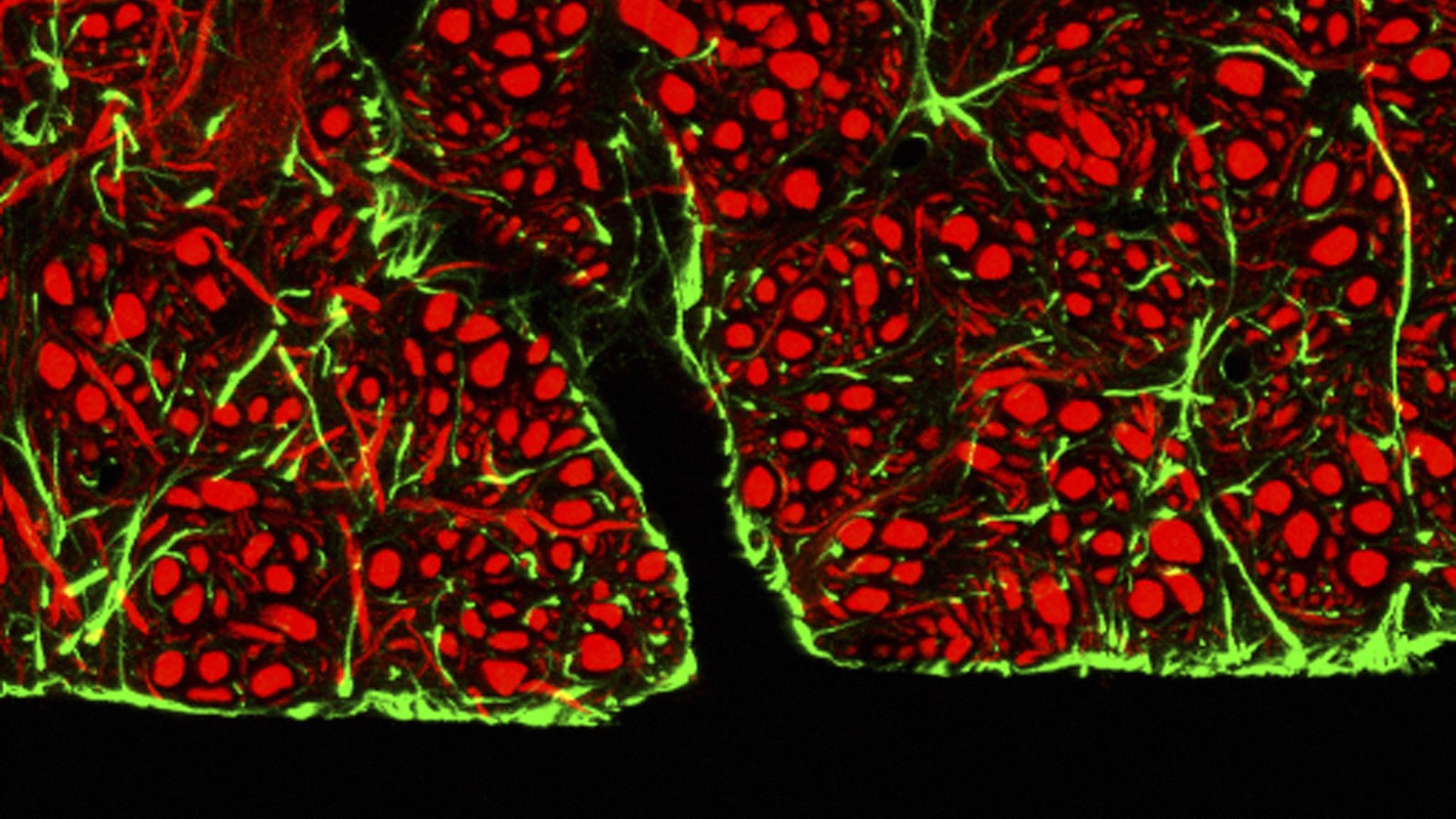
Blood-brain barrier. Confocal light micrograph of a section through a blood vessel in the brain, showing the arrangement of cells that form the blood-brain barrier. The lumen (interior) of the vessel runs horizontally across the upper frame. The endo

In this image of the blood-brain barrier, green-stained glial cells surround the blood vessels (seen here in black), providing support for red-stained neurons.

To overcome this hurdle, one current solution involves flooding the blood with drugs, hoping a small proportion passes through by sheer force of will or strength in numbers. But ingesting lots of drugs can trigger nasty side effects elsewhere in the body. Another way to crack through the defenses is to hack into systems already in place for transporting small molecules. Enter nanoparticles.

While some nanoparticles act as treatments, others play the role of Trojan horse: they pretend to be ordinary, recognized molecules, gain access through special receptors, and sneak the drugs with them as they pass through the restricted entry gates. Nate Vinzant, an undergraduate in Gina Forster’s lab at the University of South Dakota, is using iron oxide to smuggle anti-anxiety drugs into the brain.

When injected directly into the brain, antisauvagine decreases anxiety in rats. However, direct injection into the brain isn’t a feasible treatment option for humans and antisauvagine is incapable of passing from the blood to the brain on its own. To sneak it in, Vinzant attached antisauvagine to iron oxide nanoparticles, which are regularly taken into the brain via specific receptors. When hitched to iron, antisauvagine goes along for the ride because “the brain thinks it’s iron,” Vinzant says. Indeed, typically anxious rats given iron-bound antisauvagine displayed less signs of stress than untreated rats, confirming that the drug made its way from the injection site in the abdomen, through the blood, and across the barrier.

More than just a boon for anxiety treatment, this research is a proof of principle. Other drugs can be tethered to nanoparticles like iron and use the same uptake mechanism.

Remote Controls

In addition to improving treatments, nanoparticles can also help researchers understand diseases and the brain in general. President Obama’s BRAIN Initiative, a program aiming to map the neurons and connections within the human brain, is initially focused on the development of novel technologies that may lead to future breakthroughs. This fall, Sarah Stanley, a post-doctoral researcher in Jeffrey Friedman’s lab at Rockefeller University, received one of the initiative’s first grants to develop technology that uses nanoparticles to control neurons.

Stanley’s goal is to examine a diffuse network of neurons distributed throughout the brain. “We were really looking for a way of remotely modulating cells,” Stanley explains, but existing tools weren’t able to go deep or dispersed enough. For example, one popular new technique known as optogenetics, which uses light to activate neurons, wouldn’t work for Stanley’s project because light can’t penetrate very far into tissue. Another method involving uniquely designed drugs and receptors can’t be quickly turned on and off. So Stanley turned to nanoparticles.

Ferritin nanoparticles bind and store iron, and Stanley genetically tweaked the nanoparticles to also associate with a temperature-sensitive channel. When the channel is heated, it opens, leading to the activation of certain genes.

To generate heat, she used radio waves. Unlike light, radio waves freely penetrate tissue. They hit the ferritin nanoparticle, heating the iron core. The hot iron then heats the associated channel, causing it to open. Stanley tested the system by linking it to the production of insulin; when the radio waves heated the iron, the channel opened and the insulin gene was turned on, leading to a measurable increase in insulin. The nanoparticle is “basically acting as a sensor for radio waves,” says Stanley. It’s “transducing what would be entirely innocuous signals into enough energy to open the channel.”

To optimize the system, Stanley first tested it in liver and stem cells of mice, but she is now moving into mouse neurons, intending to turn them on and off with her nanoparticle remote control. The radio waves’ penetration should allow researchers to use this technique to manipulate cells that are both deep and spread throughout the brain. “This tool will allow us to be able to modulate any cells in any [central nervous system] region at the same time in a freely moving mouse,” Stanley notes.

For now, remotely controlling neurons in this way will only be used in research to discover more about these deep or dispersed networks. But eventually, it could potentially be combined with gene therapy to fine-tune protein levels. For example, in diseases with a mutated or dysfunctional gene, like Rett Syndrome, a developmental disorder causing movement and communication difficulties, gene therapy aims to replace the defective gene. Adding a functional gene isn’t always enough, however, as it must be adjusted to produce the appropriate amount of protein. Controlling the gene with radio waves and nanoparticles would allow doctors to carefully tweak the protein production.

Although that’s a long way off, nanoparticles are claiming their spot in the future of neuroscience. In a press conference on innovative technologies at November’s Society for Neuroscience Conference in Washington, D.C., David Van Essen, a neuroscientist at Washington University in St. Louis, indirectly praised Stanley’s project. “It was really exciting to see earlier this fall that the [National Institutes of Health] has awarded about 50 new grants for some amazing, innovative ideas.” He then went on to introduce Rzigalinski’s research on Parkinson’s disease, mentioning how nanotechnology is a new tool providing hope for reversing devastating diseases.

Neuroscientists may need to temper their excitement, however. Clinical trials for cancer treatments have stalled as some nanoparticles—including iron—have been found to generate free radicals, which can trigger cell death. But a compromise may be possible: iron nanoparticles are also being studied to enhance magnetic resonance imaging (MRI) signals and toxicity doesn’t seem to be an issue so long as the doses are kept low. If the drugs the nanoparticles carry with them are powerful enough, lower doses can be used and harmful side effects prevented.

So far, cerium oxide nanoparticles have avoided this issue, but their relentless crusade against free radicals may lead to a different problem: free radicals are crucial to certain cellular processes, including the regulation of blood pressure and function of the immune system. The question of how much free radical scavenging is too much remains to be answered. But, considering the elevated levels of free radicals in disease, perhaps the nanoparticles will have their hands full lowering levels to a healthy range, let alone reducing them enough to cause trouble.

It’s still too early to know whether nanoparticles will usher in a new wave of clinical treatments, but to many researchers, it’s clear that they show great promise. Rzigalinski, for example, has long since apologized to her student for her disbelieving rant. Small as they may be, nanoparticles have the ability to take on Goliath-sized tasks, bringing researchers deep inside the brain, past its defenses, ready to fight destructive forces in new ways.

BY: Teal Burrell

Image credit: C.J. Guerin, PhD/Science Photo Library/Corbis

The Stages of Fibromyalgia

The Stages of Fibromyalgia

The Stages of Fibromyalgia

fibromyalgia3

If you’ve been diagnosed with fibromyalgia or are a caregiver to a loved one who’s suffering, you know how hard it is to physically and emotionally manage this condition. But there are treatments that can help. Get expert advice to ease symptoms and 5 tips to help soften the burden on caretakers…

Your body aches and you feel exhausted, yet you’re unable to sleep.

“Basically, you blew a fuse,” says internist Jacob Teitelbaum, M.D., medical director of the Fibromyalgia and Fatigue Centers and author of From Fatigued to Fantastic.

“Fibromyalgia represents an energy crisis,” says Dr. Teitelbaum, who suffers from the condition. “You’re spending more energy than you can make.”

If you’re wondering why or how you developed the disorder, don’t expect an easy answer. Fibromyalgia may run in some families and often follows infections or physical or emotional trauma. Or it appears for no reason at all. Women are 4-7 times more likely to have it than men, but the reasons are unclear.

Emotionally, you may be feeling confused, afraid and angry when neither you nor your doctor knows what’s happening to your body. In fact, your physician may even tell you there’s no medical problem and refer you to a psychotherapist.

“You may see eight doctors before you know what you have,” Dr. Teitelbaum says. “So you and your family may be given the impression that you’re crazy.”

It took Patricia Stephens, 62, author of Reversing Chronic Disease: A Journey Back to Health, 7 years before doctors put a name to her symptoms.

“I felt anxiety and fear,” Stephens says. “I was afraid of losing my job as a teacher, that I couldn’t raise my children or keep my marriage together, and that I would lose purpose and productivity.”Researchers are investigating hormones, immune system differences, brain chemistry and genetics for answers.

Because sufferers are especially sensitive to physical pain, they suspect that nervous-system problems may be a culprit.

Fibromyalgia pain generally targets 18 points on both sides of the body where pressure causes tenderness.

If sensitivity lasts at least three months in 11 out of 18 pressure points or muscle locations, you may have fibromyalgia, according to the American College of Rheumatology.

Making matters more confusing, fibromyalgia sufferers may also be diagnosed with other conditions, including irritable bowel syndrome, a gastrointestinal disorder characterized by either constipation or diarrhea; headaches; and/or temporomandibular joint syndrome (TMJ), which is inflammation of the jaw joint.

There are steps you can take to ease symptoms. Dr. Teitelbaum recommends a regimen he calls “SHINE”:

  • Sleep. For a better night’s rest, keep the bedroom at 65°F; take a hot bath before sleep to relax your muscles; and spray pillows with lavender oil, which helps promote sleep, he advises. Take 75-150 milligrams of magnesium, a natural relaxant, before bed. And avoid caffeine. Aim for 8-9 hours of shut-eye a night.
  • Hormones. Ask your doctor to test you for a possible hormone deficiency.
  • Infections. Lack of sleep may raise your vulnerability to viral or yeast infections. If you’re sick, see your doctor for treatment right away.
  • Nutritional supplements. Ask your doctor to test your vitamin levels, and take supplements as needed.
  • Exercise. Try yoga. Women with fibromyalgia who practiced yoga for eight weeks had a 24% pain reduction, 30% fatigue reduction and 42% depression reduction, according to a 2010 study at Oregon Health & Science University.

Also, consider having a massage. This may sound masochistic, given your sensitivity to pressure. However, fibromyalgia patients who got 30-minute massages twice weekly for five weeks slept longer with decreased restlessness during the night and suffered less anxiety and depression, according to a researchers at the University of Miami School of Medicine. They also registered lower levels of substance P, a neurotransmitter that raises pain sensitivity, which is often 2-3 times higher in fibromyalgia sufferers than people without the disorder.

Education, Exercise and Self-Management
Conventional treatments typically address pain and sleeplessness. In 2007, pregabalin, an anti-seizure drug usually used to treat epilepsy, was the first drug approved to treat the physical pain of fibromyalgia.

Researchers believe the drug works by minimizing neuron transmissions that affect pain nerve signals.

Your doctor may prescribe duloxetine or milnacipran. These are antidepressants that increase brain chemicals to calm pain signals.

Besides one of these medications, your doctor also may suggest nonsteroidal anti-inflammatory drugs (NSAIDs) such as ibuprofen or naproxen to ease pain and stiffness.

But even if you take medications, you may still feel achy and fatigued — and frustrated that you’re not 100%.

“Having fibromyalgia can increase the risk of depression and anxiety,” says geriatric psychiatrist William Uffner, M.D., medical director for the Older Adult Program at Friends Hospital in Philadelphia.While being treated for fibromyalgia, continue with self-care steps, including the SHINE regimen.

Here are additional steps that can help:

  • Assess your mood. If you’re a grouch when you’re hungry, you may be low on cortisol, an adrenal stress hormone, says Dr. Teitelbaum. A holistic physician can check cortisol levels and perhaps prescribe a very low dose of cortisol. Go to the American Board of Integrative Holistic Medicine website for a list of board-certified holistic physicians.
  • Record your sleep. Sleep disturbances may be caused by sleep apnea, a condition in which breathing is interrupted, or restless-leg syndrome, which causes involuntary leg movements. Dr. Teitelbaum suggests videotaping yourself while sleeping: If your legs are twitching or you stop breathing periodically, see a sleep specialist.
  • Supplement your energy. Dr. Teitelbaum recommends taking ribose, a nutrient involved in energy production, to raise energy levels. “Studies show that patients’ energy increased 61% after three weeks, and sleep improved,” he says. His suggested dose is 5 grams three times a day for three weeks.

A recent breakthrough is the discovery of a new retrovirus, xenotropic murine leukemia virus-related virus (XMRV), found in most people with chronic fatigue syndrome (CFS).

“Within a year or two, there will be a test for CFS, which tends to overlap with fibromyalgia,” Dr. Teitelbaum predicts.

Though the link between CFS and fibromyalgia hasn’t been determined, the conditions may share a common cause, which is why the discovery of the virus is important. Researchers suspect that XMRV may lie behind other illnesses too.

A Vital Part of Caregiving
As a caregiver, you may feel stressed and tired as you take on more responsibilities. You may also start to question whether your loved one is actually ill.

“You want to support your loved one, but you’re struggling with the extra load,” Dr. Teitelbaum says.Steps you can take:

  • Offer support. Your loved one already feels alone — and maybe foolish, for having an illness their doctor isn’t validating. “The No. 1 thing patients need to know is that you love and accept them,” Dr. Teitelbaum says.
  • Educate yourself. Learning about fibromyalgia can help you understand what your loved one is going through.
  • Avoid burnout. Learn to say “no” sometimes, says Dr. Teitelbaum. “Otherwise, you’ll be useless to the person with the disease. Or you’ll get sick yourself.”
  • Reserve some independence. Continue to do things you love apart from your loved one: hobbies, meeting up with friends, exercise. This will help you focus on the parts of your life that are going well, Dr. Uffner says.
  • Get support. Ask your doctor to refer you to a caregiver support group.By Dorothy Foltz-Gray


Fibromyalgia – dealing with an painful body

Fibromyalgia – dealing with an painful body

Considered a disorder, fibromyalgia consists of pervasive musculoskeletal pain, accompanied by memory and mood issues, fatigue and sleep problems, according to the Mayo Clinic.

Achy Body Triggers

There are many achy body triggers, and the weather is a big one. Barometric pressure is the measure of weight exerted by the air surrounding us. Right before a storm, barometric pressure drops, and this activates  aches and pains.

The same goes for humidity. Humidity measures the amount of water vapor in the air. When it is low, patients are more likely to have a headache and suffer aching muscles and joints. Even being out in the wind can aggravate symptoms.

A Mystery

Doctors don’t know what causes fibromyalgia specifically, the National Institutes of Health reports.

However, the Mayo Clinic notes women are far more likely than men to acquire this disorder. Those suffering from fibromyalgia are more apt to have TMJ (temporomandibular joint pain), anxiety, depression and irritable bowel syndrome.

The Mayo Clinic notes that researchers believe this disorder makes people feel pain more profoundly than those who don’t have the condition. This is believed to happen because of the way the brain processes pain signals when you have fibromyalgia.

No Magical Cure for an Achy Body

So far, fibromyalgia is not curable, explains the Mayo Clinic. That said, there are medicines available on the market that have helped some sufferers.

There are increasing documented cases showing that IV Ketamine Infusions are very effective in the treatment of Fibromyalgia.

How To Treat the Aches?

The Mayo clinic recommends getting massages by a professional, if possible. Getting a back rub from a family member or friend runs a close second. They also say that there are over-the-counter inflammatory medications that dull the pain. Before taking them, check in with your physician.

Yoga reduces pain and helps maintain flexibility. Being outside on a warm, dry, sunny day is very therapeutic. Soaking in a hot bubble bath filled with Epsom salts relieves aches and pains too.

When under stress and the patient’s achy body demands attention, yoga and deep-breathing exercises go-to solutions. They lessen physical and mental pain and angst. Connie Ludtke, R.N., a Mayo Clinic expert, agrees that learning to relax is very important in coping with fibromyalgia.

When it’s cold and damp outside, dress in layers, wearing tights aggravates Fibromyalgia symptoms.




UA-56982048-1