Fibromyalgia: Best Tips for the Disease

Fibromyalgia: Best Tips for the Disease

Get Advice and Support From Other Fibromyalgia Patients

By Mary Gustafson. A fibromyalgia diagnosis raises as many questions as it answers, leaving sufferers feeling frustrated and alone. But support is as close as the nearest fibro blog. Here, top bloggers with the condition share their best tips for feeling healthy and hopeful.

When Felicia, 28, was diagnosed with fibromyalgia in 2001, there was little information available to patients.

She found medical articles in magazines, but not first-hand advice from others going through the same experiences. So she started a blog to support and educate fibromyalgia sufferers.

Besides blogging about relatable topics like pain, fibro fog and fatigue, she provides a list of household products for fibro sufferers, from braces and orthotic slippers to bottle openers and veggie peelers.

Felicia (who doesn’t reveal her last name or image to protect her privacy) is part of a growing community of fibromyalgia bloggers, for whom sharing experiences is a valuable treatment tool. Many expand their reach through Facebook and

“Any kind of experience, good or bad, is improved when it’s shared,” says Nora Ishibashi, Ph.D., a Chicago-based clinical psychotherapist in private practice. “When we’re understood, it’s easier to deal with problems.”

Unlike traditional support groups, blogs offer immediate gratification and a range of experiences.

If you’re frustrated, sad or so sore you can barely move, empathy and advice are only a few clicks away.

But blogs shouldn’t replace professional medical care. Talk to your doctor about managing your physical and mental symptoms of fibromyalgia.

Here, we asked top fibro bloggers for their best tips for dealing with the condition. Plus, we introduce you to the women behind the words and tell you how to find them online.

Tip #1: Share your story.
Bloggers say:
Sharing personal anecdotes can help you connect to others with the same condition while exploring your own feelings too.Dannette Rusnak, who was diagnosed with fibromyalgia in 1997 after enduring a head trauma, created www.fibrohaven.com to better understand her emotions during a difficult period.Her blog gets several thousand visitors a month. Responses from the fibro community not only raised her spirits but gave her new inspiration.“I have a sense of responsibility to improve my health – not just for me, but also for everyone who reads [what I write],” Rusnak says.

Her blog encourages others to open up: “We’re all so connected in so many ways, and if we don’t share or talk about it, how would we know?”

(You can also find FibroHaven on Twitter, Facebook and through the North San Diego County FibroHaven Support Group.)

Experts say: Online support groups, like blogs, offer an outlet for the frustration many fibromyalgia sufferers feel, Ishibashi says.

“The person who can understand a dysfunction best is someone who has the same experience.”

Tip #2: Regular exercise is essential.
Bloggers say:
Regular, gentle exercise makes it easier to manage fibromyalgia symptoms.“I do yoga and walk my dogs every day,” Tyler says.“If I skip more than a day or two, my pain is worse. I then get so stiff I can barely move or stretch.”Tyler was diagnosed with fibromyalgia in 2006 after suffering a bout of chronic fatigue syndrome, which she and her doctors think stemmed from a viral infection.

In addition to her blog, Tyler maintains a Facebook support group called The Fibromyalgia Fun House.

Kimberley Linstruth-Beckom of the Fibro and Fabulous blog, who was diagnosed in 2005, advises to keep activity low-impact to avoid injury.

“I’m mindful of my limits,” she says. “I practice gentle yoga, even if it’s only five minutes a day. Stretching sore muscles in my back and neck really helps keep flares at bay.”

Linstruth-Beckom is on Facebook and Twitter, and has also written books on fibromyalgia.

The first, The Fibro Hand, was about her journey to being diagnosed with the condition. Her second, about fibromyalgia and relationships, is titled Fibromyalgia and Sex Can Be a Pain in the Neck. She also published a spin-off of her blog, called Fibro and Fabulous: The Book.

Experts say: Yoga is a good choice, says Ishibashi, because it can be modified to suit each fibro patient’s needs.Many sufferers develop muscle tension as a defense against physical pain, says Ishibashi. “The tension can become habitual and lead to uncomfortable, unnatural positions. Yoga restores mobility and flexibility.”Plus, yoga doesn’t stress bones and joints the way high-impact activities – like jogging and aerobics – can.

The practice offers emotional benefits for fibro sufferers too.

“Moving your body through a range of motion releases tension in your mind,” Ishibashi says.

“Often, yoga is taught as a way to make friends with your body, learning what it can do, and gently encouraging it to do a bit more.”

Tip #3: Don’t be discouraged by people who can’t understand your condition.
Bloggers say:
“If someone regularly hurts your feelings, stresses you out, belittles you or gets angry about how you’ve had to change your life, they’re only going to make you worse,” says Adrienne Dellwo, who runs About.com’s Fibromyalgia and Chronic Fatigue Syndrome channel, including its blog, forum and weekly newsletter, which has thousands of subscribers.“Of course, we’re stuck with some people, but you can limit your contact,” she adds.Experts say: Depression is prevalent among patients with fibromyalgia, says Patrick Wood, M.D., a fibromyalgia specialist who practices in Mississippi.It can arise as a co-existing condition or as a result of struggles with symptoms.

Avoiding exposure to negative people and situations can help ward off feelings of sadness or anger.

Tip #4: Feeling helpless? It’ll pass.
Bloggers say:
Fibromyalgia’s mysterious aches may seem like they’re taking over your life.But bloggers say it’s possible to regain control.“I tell anyone who will listen that life is a beautiful, painful and exquisite condition that only leads where you take it,” Tyler says.Experts say: If you’re recently diagnosed, it may take time to feel like your pre-fibro self, Ishibashi says.

Studies have shown that people “revert to their normal feeling of happiness or unhappiness within a year of even a very major event,” she says.

Tip #5: Keep a food journal to avoid flare-ups.
Bloggers say:
Food sensitivities, such as excessive swelling or irritable bowel syndrome, are common with fibromyalgia.But keeping track of what triggers your ailments can help you avoid them.“Write down your reactions to foods when you eat them. Do you feel tired or sluggish? Did you become bloated or swell up? Were you feeling more pain than usual?” says Linstruth-Beckom.By tracking foods she ate, Linstruth-Beckom discovered that carbonated beverages and prepared foods with MSG and other additives made her hands and ankles swell. White pastas and bread left her tired and sore the next day.

Experts say: Reactions like Linstruth-Beckom’s aren’t uncommon among fibro patients, says Christine Gerbstadt, M.D., R.D., a doctor and registered dietitian based in Maryland.

“Many highly processed foods contain ingredients – such as fatty acids, fructose and excessive calories – that are pro-inflammatory,” she says. “Any food that promotes inflammation will exacerbate fibro symptoms.”

Tip #6: Consider alternative, integrative and holistic specialists as part of your medical care.
Bloggers say:
Herbal medicine, supplements, vitamins and regular trips to the chiropractor and acupuncturist can be important tools to battling fibromyalgia, according to the bloggers we interviewed.Rusnak, for example, regularly visits a holistic chiropractor to ease symptoms.Experts say: “Eastern, alternative and holistic practices triumph in those gray areas in which medicine fails,” says Robin Mayfield, D. C., an Austin, Texas, chiropractor.When treating fibromyalgia patients, she uses chiropractic adjustments, acupuncture and herbal supplements to address the digestive, immune-system and emotional issues common with the condition.

“Any relief in these areas will improve the body overall,” she says.

How Much Do You Know About Fibromyalgia?
Described by Hippocrates in ancient Greece, fibromyalgia is one of the world’s oldest medical mysteries. The disease – a complex illness marked by chronic muscle, tendon and ligament pain, fatigue and multiple tender points on the body – affects about 2% percent of Americans, most of them women.
Migraine Relief: 10 Myths and Facts

Migraine Relief: 10 Myths and Facts

Migraine Relief: 10 Myths and Facts

By Diane Wedner

Migraines are more than just bad headaches. But many people – and even some doctors – don’t fully understand this complex condition or what’s required for migraine pain relief.

You wake up to throbbing pain on one side of your head. The sun streaming through the bedroom window scorches your eyes like a lightning flash. Moving your head even slightly is excruciating.

Like 35 million other Americans, you’re in the throes of a migraine – the most common cause of disabling headaches. About 18% of women and 6% of men experience the brain disorder, according to the Migraine Research Foundation (MRF), a Manhattan-based nonprofit organization that provides information and support.

Even some physicians don’t recognize the cluster of symptoms that makes up migraines – such as headache, nausea, vomiting, visual disturbances and sensitivity to noises and smells. As a result, they may dismiss a severe migraine headache and other symptoms as “women’s problems,” such as premenstrual syndrome (PMS) or depression.

“Because the problem is related to their head, patients sometimes feel that doctors think they’re making the symptoms up, causing their own headaches, or overreacting,” says Cathy Glaser, MRF co-founder and president.

Lack of training is a pervasive problem, says neurologist Peter Goadsby, M.D., Ph.D., director of the University of California, San Francisco Headache Program.

“If physicians aren’t exposed to current information, they have to fill in the blanks themselves,” he explains.

The result: Along with debilitating symptoms, migraine patients often endure a variety of myths about the condition.

If you suffer from migraines, it’s important to stay informed.

Migraine pain myth #1: Migraines are just bad headaches.

Reality check: Not so! Migraine is a syndrome in which “multiple symptoms often occur simultaneously because of a cascade of brain events,” says Joel R. Saper, M.D., director of the Michigan Head-Pain & Neurological Institute in Ann Arbor, Mich.

Those brain events release pain-producing inflammatory substances around the nerves and blood vessels of the head.

The cause is unknown, but the result isn’t: Disabling symptoms that often send sufferers to bed.

Interestingly, some people don’t have pain, though severe pain is the most common symptom of a migraine. In such cases, people often have visual auras and other migraine symptoms, such as nausea.

“But if they do [have pain], it might be minor compared to the drama of nausea, stroke-like symptoms and memory changes,” Dr. Saper says.

Though ordinary headaches result from a narrowing of blood vessels and can often be eased with aspirin, migraines are caused by the expansion of blood vessels. Certain treatments may provide migraine relief, but there’s no cure.

Migraine pain myth #2: Migraines occur only in women.

Reality check: Under age 12, an equal number of boys and girls have migraines, Dr. Saper says. After the onset of puberty, men still get them, but women with the condition outnumber them 3-1. The main reason is estrogen and progesterone, which play a significant role in the disorder, according to epidemiological and clinical studies.

The two hormones help regulate pregnancy, during which migraines may “settle down,” Dr. Goadsby says. Menopause may also bring migraine relief, he adds.

Higher estrogen levels sometimes improve migraines, while lower levels may make them worse, according to the Mayo Clinic in Rochester, Minn.

Some women get their first migraine headache after starting on birth control pills; for others, oral contraceptives improve the headache pattern, the clinic says.

Migraine pain myth #3: Premenstrual syndrome (PMS) causes migraines. Reality cheek: The two conditions are sometimes connected, but “not all women with periods have PMS, and not all women with migraines have PMS,” Dr. Saper says. Migraines are sensitive to hormonal fluctuations, which occur before a woman’s period. An attack that comes within two days before or three days after a period, known as a “menstrual migraine,” is similar to other migraines but usually doesn’t include an aura (visual disturbances).

Women who experience menstrual migraines can sometimes get relief from continuous birth control pills, which reduce the number of periods to four per year.

Here are other treatments for menstrua] migraines.

Migraine pain myth #4: Women get migraines because they’re more emotional. Reality check: “That’s nonsense,” Dr. Goadsby says. “The ‘hysterical female’ argument is embarrassing.”

“Women, like men, get migraines because something’s going on in their brains,” says Glaser of the MRF. “They’re usually born with that trait. The question is: If you have the trait, what triggers the migraine?”

For both men and women, emotional stress may release chemicals that provoke migraine-causing vascular expansion in the brain, according to Harvard Medical School’s Beth Israel Deaconess Medical Center (BIDMC).

“If life is stressful – you have a bad marriage, you’re hurt – you may be more vulnerable to migraines,” Dr. Saper says.

The letdown after a stressful period also may be a migraine trigger.

Remember, though, that “lots of women are stressed and don’t get migraines,” Glaser says. “You have to have the trait.”

Migraine pain myth #5: Painkillers are enough for migraine relief.

Reality check: Because migraines can provoke multiple symptoms, one pain medicine won’t necessarily sweep them away, Dr. Goadsby says.


“There are more than 100 treatments and prevention methods for migraines,” Glaser says. “If patients could pop just one pill, they’d be doing it.”

Although painkillers often are prescribed for migraines, they’re not the most effective treatment, experts say. They don’t work, for example, against triggers such as movement or noise, which may exacerbate symptoms.

Other medications can target symptoms in addition to migraine headache. But some have serious side effects, especially if patients also use painkillers regularly.

“The more painkillers you take, the greater the potential for more headaches,” Dr. Saper says.

Called medication overuse headaches, or rebound headaches, these are more like tension headaches than migraines, Dr. Saper says. Using painkillers 2-3 times weekly over several months may make patients more vulnerable to them. There are serious health dangers from painkiller overuse.

Pain relievers such as ibuprofen (Advil) and acetaminophen (Tylenol) help relieve mild migraine symptoms, but they shouldn’t be used to treat moderate or severe migraines, according to the Mayo Clinic.

Synthetic narcotics known as opioids, such as hydrocodone (Vicodin), can be more effective, but they “change the nervous system and make it easier to get the next attack,” Dr. Saper warns. They also can be addictive.

Other drags may help patients with more severe symptoms, including:

  • Triptans: They work with brain chemistry to constrict blood vessels, helping relieve migraine pain, nausea and sensitivity to light and sound.
  • Ergot: These combine caffeine with ergotamine, another blood-vessel constrictor, and work best in patients who have pain lasting more than 48 hours.
  • Dexamethasone: This corticosteroid reduces inflammation and maybe used with other medications for migraine pain relief; it’s taken infrequently because of the risk of side effects.
  • Tricyclic antidepressants: This form of antidepressant medication may help prevent migraines by altering brain chemistry, whether or not you have depression.
  • Beta blockers: Commonly used to treat high blood pressure and coronary heart disease, these drags reduce the frequency and severity of migraines.
  • Anti-nausea medications: These help with the migraine symptoms of nausea and vomiting.


There’s another drag treatment that you may not be aware of — one popularly known to fight wrinkles:

Following two clinical studies published in the medical journal Cephalalgia in 2010, the FDA approved Botox (OnabotulinumtoximA) for the treatment of chronic migraine headaches.

The studies were double-blind, randomized, placebo-controlled with more than 1,300 study participants. At the end of the two clinical trials, the researchers concluded that Botox is safe and effective, for the prevention of chronic migraines in adults.

Multiple studies since have shown the continuing effectiveness of Botox treatment for chronic migraines.

New treatments for migraine sufferers are emerging all the time. The latest was just announced by the FDA in March 2014. It is the first medical device approved to prevent migraines in adults, providing an alternative to medication.

According to the FDA, Cefaly is a small, portable, battery-powered, prescription device that resembles a plastic headband worn across the forehead and atop the ears. The user positions the device in the center of the forehead, just above the eyes, using a self-adhesive electrode.

The device applies an electric current to the skin and underlying body tissues to stimulate branches of the trigeminal nerve, which has been associated with migraine headaches. The user may feel a tingling or massaging sensation where the electrode is applied. It is directed for use once per day for 20 minutes.

Migraine pain myth #6: Migraines aren’t hereditary.

Reality check: The child of one parent with migraines has a 50% chance of having them too, and the risk climbs to 75% if both parents experience them, according to BIDMC. The risk is 20% if even a distant relative has the disorder.

A boy may inherit the gene, but is less likely to get migraines, Dr. Goadsby says. But he can pass the trait on to his daughters, who are more likely to experience symptoms.

Migraine pain myth #7: Migraines are caused by psychological problems.

Reality check: Migraines, depression and anxiety often travel together. The causes may overlap – a

risk of depression, for example, can also be hereditary – but one condition doesn’t lead to the others.

Not everyone with depression gets migraines, and vice versa, Dr. Saper says.

“You can treat someone with depression with antidepressants, but that doesn’t mean it will help the migraine,” Dr. Goadsby says. And “you can give anti-migraine medications to a migraine patient, but she’ll still have depressive disorder.”

“The two are related only by shared brain chemistry,” he says.

Migraine pain myth #8: Caffeine helps relieve migraines.

Reality check: It helps some people – but for others, it’s a migraine trigger, according to BIDMC.

Caffeine can help relieve a mild or moderate migraine headache if you don’t consume much of it daily, Dr. Saper says.

But 4-5 cups of coffee per day may foster a caffeine dependency, and overnight withdrawal from the stimulant could trigger a migraine the next morning.

To help determine whether caffeine affects your condition, keep a headache diary to note if you get migraine symptoms after consuming caffeinated beverages, BIDMC suggests.

Migraine pain myth #9: Certain foods trigger migraines. Reality check: Some migraine patients are sensitive to:

Cheese, which contains a natural compound called tyramine

Chocolate, which has caffeine

Processed meats made with nitrates

But many others never suffer a migraine headache from food, Dr. Saper says. “It could be 100 different triggers,” he says. “It’s hard to identify them.”

If you often get symptoms after eating a particular food, keep a diary to track what you’ve eaten when you develop symptoms, Glaser advises. These 5 foods can ease migraines.

It also matters when you eat. Inconsistent mealtimes can set off migraines.

“Eat at the same time every day,” Dr. Saper advises. “Missing or delaying meals are often a key migraine trigger.”

Exercising and going to bed at the same time daily is also wise, he adds.

Migraine pain myth #10: Overachieving women get migraines from too much multitasking.

Reality check: Stress can be a migraine trigger, but “it doesn’t matter whether a woman is under stress in an office or at home with kids,” Dr. Goadsby says.

Stress-reducing techniques, such as meditation, may help manage migraines.

It isn’t just a women’s issue either.

“It’s a myth that stress applies to women more than men,” Dr. Saper says.

Don’t let this, or any other migraine myth, deter you from living your life and getting proper treatment, Dr. Goadsby says.

“You’re not crazy, weak or second-rate if you have migraines,” he says. “You have a genuine, biologically determined problem. Don’t believe anything else.”


Intravenous infusion therapy for the management of pain conditions

Intravenous infusion therapy for the management of pain conditions

Intravenous Infusion Therapy

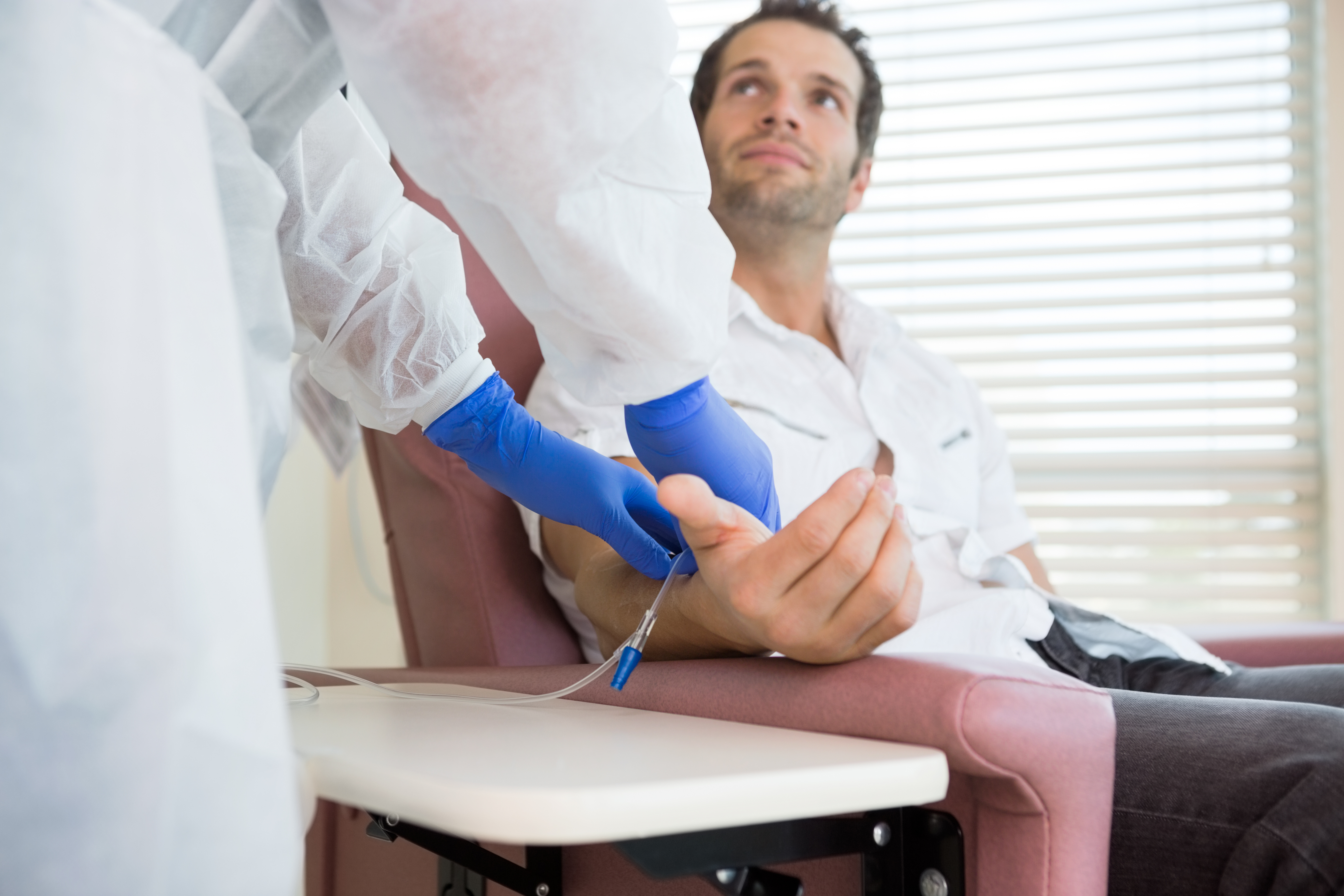
Intravenous (IV) infusion therapy is an exciting treatment option for numerous pain syndromes ranging from fibromyalgia and small fiber neuropathy to Complex Regional Pain Syndrome (CRPS) and Reflex Sympathetic Dystrophy (RSD). IV infusion therapy is very simple: an IV line is placed in the patient’s arm and the medication flows in.

There are several medications that are commonly delivered IV for pain management:

• Lidocaine
• Ketamine
• Immunoglobulin (IG)
• Clonidine
• Dexmedetomidine
• Bisphosphonates
• Magnesium

These medications are typically mixed with saline in an IV bag and slowly infused accordingly based on the medication and/or protocol being utilized.

Procedure Overview

Patient Looking At Nurse While Receiving Intravenous Treatment I

Dr. Hanna will first select the appropriate medication to be used in the infusion depending on the type of pain that you are experiencing. Next, the office staff will weigh you to determine the proper amount of medication needed and mix it with saline in an IV bag. Next, Dr. Hanna will place an IV line in your arm or hand per standard IV protocols. The medication is infused through the IV over variable times depending on the medication. It’s that simple. During the infusion process, you will be placed on a monitor and your vitals will be closely observed for the duration of the infusion.

Medication Overview

Lidocaine – Blocks sodium channels in the neuronal cell membrane that may potentially play a role in the pathogenesis and maintenance of both neuropathic and inflammatory pain

Ketamine – N-methyl-D-aspartate (NMDA) Receptor antagonist – therefore decreases sustained neuronal depolarization and excitatory transmission along afferent pain pathways in the dorsal horn of the spinal cord

Immunoglobulin (IG) – Counteracts neuroinflammation by inhibiting complement deposition, neutralizing cytokines and growth factors, speeds up clearance of potentially pain-inducing auto-antibodies, and activation of macrophages and T cells through FcγRIIb receptor

Clonidine – α2-adrenergic receptor agonist believed to reduce of norepinephrine release from the α2-adrenergic in the periphery

Dexmedetomidine – Selective α2-adrenergic agonist that may have a role in treating painful conditions that are manipulated and/or attenuated by the sympathetic nervous system

Bisphosphonates – Decreases neuropathic bone pain by suppressing bone resorption via osteoclast inhibition, shortens osteoclast life span and decreasing the acidity of the local microenvironment

Magnesium – Competitive NMDA receptor antagonist that decreases acute and chronic pain by stabilizing abnormal nerve excitation

How Many Treatments are Required?

The response to treatment varies patient by patient. Most require several treatments; the amount required depends on the medication and the protocol being used. Some people respond at first infusion, but most will not feel the full benefit until several treatments have been administered.

Is Infusion Therapy Right for me?

If you suffer from chronic pain that has not responded to medication or other traditional treatment options, then infusion therapy may be an option for you.

To make an appointment today with Dr. Hanna, call 727-797-7463. 

Auto accident? Calling your attorney should take a back seat to making an appointment with a pain specialist!

Auto accident? Calling your attorney should take a back seat to making an appointment with a pain specialist!

Auto AccidentBeing in a car crash is an unpleasant experience. Even if you experience only minor injuries, an accident can leave you confused and shaken up; so much so that it can be difficult to know what actions to take. Should you call the police? Should you contact an attorney? Should you go right to the emergency room? Or should you just go home after exchanging insurance information with the other driver(s) involved? This article will describe some general best practices for what to do immediately after a car accident.

First thing’s First, Treat your Injuries

The most important thing to worry about after your auto accident is your personal health, and the health of the others involved in the crash. If you are severely injured, seek medical help immediately. Call an ambulance, or have someone drive you if they are able.
If your injuries are not life-threatening, go see an injury physician right after you exchange insurance information with the other involved drivers. If you are OK and someone else is injured, help him or her get to an injury physician. Even if you have no immediately recognizable symptoms after your accident, make an appointment to see a doctor who can diagnose and treat any hidden conditions such as a concussion or brain injury.
After you have addressed your injuries, then (and only then) you can think about the other issues associated with the accident – whether it’s dealing with insurance companies, legal issues, or something else. Your health and safety, as well as that of the other people involved in the accident, should be your top priority. If you are involved in an automobile accident, visit a qualified injury physician immediately.

Do you need to see a Florida Headache Treatment Specialist?

Do you need to see a Florida Headache Treatment Specialist?

migraine - headache

Migraine Headaches

Do you need to see a Florida Headache Treatment Specialist?
A wide range of factors can cause headaches and the pain felt with one type of headache can be unique from the pain felt with another type of headache. Some headaches are caused by tension, such as after a long day at the office. Other headaches may be caused by pressure on the spine or other factors caused by an accident or injury. Still other headaches may be associated with recurring migraines that you experience. Dr. Hanna is a headache treatment specialist at the Florida Spine Institute and may provide you with a source of relief from the headache pain that you are feeling today.
We know headaches and how to treat them
When you meet with Dr. Hanna, you will be able to learn more about the many treatment options that have been used with great results to minimize pain or to provide complete relief for the pain that you are feeling. Some headaches can be so intense that they can cause other severe symptoms, such as nausea and vomiting. Others may prevent you from being able to get out of bed and function normally until the pain subsides. Through effective treatment for the pain, you may be able to alleviate your pain now with great results. In some cases, certain headache treatment options can be used to treat an underlying condition that is causing the pain, and this can remove the pain entirely.
Contact the Florida Spine Institute today
If you have been dealing with recurring or regular headaches and your headaches are causing interruption in your life, now is the ideal time to contact Dr. Hanna at the Florida Spine Institute. Our goal is to help each of our valued patients explore their options for pain intervention through injections in greater detail during an initial consultation. An effective treatment plan will be designed and implemented patient-by-patient by our team of specialists. Living with regular or recurring pain can be debilitating, but we strive to provide you with the best results possible. Contact our office now to learn more about the steps that we can take to alleviate the pain that you are feeling.

UA-56982048-1