
by admin | Apr 9, 2015 | Uncategorized
Simple lifestyle changes and natural approaches can often make a difference when you’re seeking migraine relief. Here are 8 self-care techniques that may help…
What do you do once you feel the throbbing pain and other symptoms that accompany migraine headaches?
Whether you run for a dark room or to the medicine cabinet, you might consider one more approach: self-care therapies. They can ease pain and reduce the frequency of migraine attacks.
Migraines are vascular headaches, meaning they’re triggered by the temporary narrowing of blood vessels in your head. This reduces the flow of blood-transporting oxygen to your brain, producing many unpleasant symptoms. They can include severe pain, light and noise sensitivity, auras, nausea and vomiting. Often, the pain is felt on just one side of the head, according to the National Institute of Neurological Diseases and Stroke (NINDS).
Many migraine patients use self-care techniques along with medication to relieve migraine symptoms. In fact, about half of patients reported using at least one non-pharmaceutical therapy to self-treat their migraines, according to a 2013 study published in Headache: The Journal of Head and Face Pain.
Here are 8 self-care techniques that experts say may help.
1. Keep a migraine diary.
You might think that migraines are unpredictable. But 70% of migraine sufferers experience early warning symptoms that may be identified with a headache diary, according to a 2009 Georgia State University study.
“Keep a really good diary or journal,” advises Sheena Aurora, M.D., clinical professor of Neurology and Neurological Sciences at the Stanford University School of Medicine in California.
“This is where you can log your medication use, how often you’re having headaches, your diet and any other triggers or patterns that you see,” she says.
Share this information with your doctor at each appointment.
2. Work out regularly.
Moderate exercise may reduce frequency, intensity and length of migraine attacks, according to a 2011 study in Cephalalgia, a peer-reviewed medical journal.
“Take a walk in a casual, yoga-like fashion for 30 minutes a day – or even a 15-minute outdoor walk on your lunch break – to [give] your body the benefits of modest exercise and your brain space and relief,” suggests Richard P. Kraig, M.D., Ph.D., director of the migraine headache clinic at the University of Chicago Medicine.
This process will help release stress, improve concentration and reduce excitability or tension, Dr. Kraig says.
“We’ve found that exercise, plus environmental enrichment [spending time in pleasant or interesting surroundings], makes the brain stronger against migraines,” he says.
3. Snuggle up with your partner.
Many people avoid sexual activity during migraine attacks. But engaging in it may actually lead to partial or complete relief, German researchers found in 2013.
That’s because physical intimacy produces a rush of feel-good hormones called endorphins, your body’s own natural painkillers.
“Although the science on this is limited, it’s intriguing that it might work for some individuals,” Dr. Aurora says. “I’ve actually heard about this approach being used by patients.”
4. Consider supplements.
Migraines are sometimes caused by vitamin or mineral deficiencies or imbalances, and many patients who take riboflavin or magnesium supplements find relief with minimal side effects, according to a 2012 study published in the journal Biological Trace Elements Research.
Ask your doctor before taking any supplements.
Taking 50 mg of riboflavin daily is enough to treat mild migraines; 500 mg of magnesium has been shown to reduce migraine frequency and severity, Dr. Aurora says.
“I tell those with regular migraines to start taking a supplement and keep a log to see if certain symptoms subside,” she adds.
5. Clean up your sleep act.
If you often wake up with a headache, this is a sign that your sleep patterns may be the culprit.
In fact, the onset of nearly half of all migraines occurs between 4 and 9 a.m., according to the American Headache Society Committee on Headache Education, a nonprofit educational resource for health professionals.
Being sleep deprived, over-sleeping or suffering from sleep disturbances, such as obstructive sleep apnea or restless leg syndrome, may trigger a migraine, according to the American Migraine Foundation.
In turn, headache sufferers are also at higher risk of developing a sleep disorder.
Establish regular sleep hours to lower your chances of experiencing sleep-related migraines.
“Stability with sleep is crucial with migraines,” says Dr. Aurora. “Going to bed and getting up at the same time each day is generally more important than the total number of hours you’re sleeping at night.”
6. Practice mindfulness meditation or yoga.
One of the biggest migraine triggers is stress, but it’s often the hardest one to manage. Luckily, a variety of stress-reduction techniques can help.
Adults found relief from migraine symptoms when they participated in 8 weeks of a mindfulness-based stress reduction program, according to a 2014 study conducted at Wake Forest Baptist Medical Center in Winston-Salem, N.C. After using meditation and yoga principles, subjects reported fewer migraine attacks, less pain, reduced stress, anxiety and disability, and a better quality of life.
People with migraines “are often anxious people,” Dr. Kraig says. “Since migraines and anxiety are [associated medical conditions], finding a way to relax, like yoga, will help calm the winding up of the string of stressors that can trigger migraine attacks.”
7. Get a massage.
Massage can be an effective complementary therapy for treating migraines, especially those brought on by stress or sleep issues.
“Massage works mostly as a de-stressor,” explains Dr. Aurora. “As women get older, we hold more pressure in our necks, and that seems to be a hot-spot trigger for migraines.”
The neck-brain stem connection stores tension and pressure that can be released with physical manipulation from a massage.
You don’t need a daily massage, but the healing touch might be just enough to keep symptoms at bay when you feel the warning signs of a migraine attack. Just make sure you choose a licensed massage therapist.
8. Learn biofeedback.
Biofeedback, a pain management intervention, may work to lessen the stress and muscle tension that can trigger migraine, according to a 2010 study reported in Cleveland Clinic Journal of Medicine.
Although there are home programs available, biofeedback is traditionally done with a psychologist who uses a computer monitor device that illustrates what happens when your brain responds to stress. The aim is to help patients learn to control specific body functions, including breathing rate, muscle tension and heart rate.
“It’s very valuable to learn biofeedback and muscle relaxation with a practitioner first and be taught the techniques properly,” says Dr. Aurora. “Then, they can be effective self-care tools that you may use on your own.”

by admin | Apr 9, 2015 | Uncategorized
Leg Cramps: Causes and What to Do
There is nothing quite like having leg cramps. I can be sleeping soundly one minute and be wide awake and writhing in pain the next. It feels like someone has tied barbed wire around my calf muscle and then put a wrench on both ends. But what are some possible causes?
There have been times when it’s easy to assume my leg cramps simply come from too much exercise. Roughly 10 years ago, I was an avid gym patron. Each morning, I got up at 5 a.m. and headed out. I had a pretty stringent routine.
First, I did my cardio exercises. I ran between 3.1 and 5 miles on the treadmill every morning. I started out at a modest 8 miles per hour, but as I went along, I increased my speed. By the end of my run, I was at a sprint.
Then I did strength training on both the weight machines and free weights. One morning, I would work on my upper body. On the following day, I would work on everything from the waist down.
One day, I noticed a growing pain in my hip. Before long, it was pretty clear to me I had injured a flexor muscle due to overuse. But at night ? when I had cramps in the back of my calf, too ? I assumed it also was due to my exercise routine.
I stopped using the treadmill for a while and used the ellipticals instead. This helped my hip to heal. However, I still continued to get leg cramps off and on.
In my experience, muscle injury due to overuse can certainly cause leg cramps. But one should not just assume that’s what it is.
The Mayo Clinic says that during periods of heavier exercise than normal you can become dehydrated, which can cause leg cramps as well. Simply replenishing your body’s water supply can alleviate leg cramps that result from dehydration.
But dehydration also can result from inadequate fluid intake even during normal daily activity.
Other Leg Cramps Causes
I’ve mentioned a few leg cramps causes. These were the causes I originally knew about. But there are many more.
According to the Mayo Clinic the depletion of calcium in your body is one of them. But Mayo also states that too little potassium and magnesium can play a role in leg cramps as well. And the depletion of these minerals in the body can be caused by several factors.
For example, the Mayo Clinic says people who take diuretics and blood pressure medications may find their levels of calcium, potassium and magnesium are still not up to par. These medications have a tendency to deplete mineral levels, in spite of efforts to eat foods rich in these minerals.
Leg cramps causes can come from much more serious issues as well. Harvard Medical School says about 30,000 people in America currently suffer with amyotrophic lateral sclerosis (otherwise known as ALS, or Lou Gehrig’s disease). About 5,600 people are newly diagnosed every year. Muscle cramps in the legs can be one of the symptoms.
The National Institute of Neurological Disorders and Stroke states that muscle pain, stiffness and cramping in the legs and toes are also symptoms of Parkinson’s disease.
Studies through the National Kidney and Urologic Diseases Information Clearinghouse (NKUDIC) show that leg cramps can be the beginning signs of serious kidney malfunction. When kidneys don’t function properly, wastes aren’t being filtered from the blood in a sufficient manner. The resulting condition is called uremia.
Sometimes leg cramps causes are simply unknown. Although my leg cramps are terribly painful, at least they don’t happen on a frequent basis.
I’ve never consulted a doctor about my own leg cramps. So far, the ones I’ve experienced seem to be of this variety: infrequent, with no other symptoms that accompany them.
But if leg cramps should become frequent and persistent, you should not hesitate to see your doctor. There may be a serious underlying cause.
Remedies for Leg Cramps
There are many remedies for alleviating leg cramps causes, but you should do your homework and choose wisely.
One of the most common remedies doctors used to treat leg cramps was quinine, a chemical with medical uses. However, according to Johns Hopkins Health Alerts, quinine can have some serious side effects. It should only be used for its primary purpose: to treat malaria.
Johns Hopkins says that doctors are exploring the use of muscle relaxers, numbing agents and calcium channel blockers as other treatments for leg cramps causes. Johns Hopkins also says diazepam and naftidrofuryl (an antiseizure medication) may be effective, but patients are encouraged to try B-complex vitamins.
As I said earlier, I don’t know what causes my leg cramps. I haven’t consulted a doctor because they happen so rarely. So far, I have found relief with some very simple methods.
Most of my leg cramps tend to happen at night. Simply getting out of bed and walking around for a minute or two has made them go away.
I’ve also used eucalyptus-based salves or rubs. Between the massaging motion and the warmth that radiates to my muscle, the pain usually subsides within a few minutes.
But if my pain still persists, I find relief by applying a heating pad. However, other people I’ve talked to have preferred to use ice packs to soothe their leg cramps.
Some athletes I know swear by stretching exercises. One exercise I hear about often is placing your hands on each side of your foot with your fingers cupping the bottom right around the ball joint, just below the toes. Pull the foot gently toward the shin.
The Mayo Clinic suggests doing light activity for five to 10 minutes before stretching. For calf muscles, you can also try the downward dog pose exercise.
Keep yourself hydrated. Again, be sure to see your doctor if leg cramps become frequent and persistent or if you have any other concerns about their causes.
Source: Lifescripts

by admin | Apr 9, 2015 | Uncategorized
Getting fit feels great, but you’ll probably have some aches along the way. Don’t let the wear and tear derail your quest for a fitter body. Find out what’s causing you to hurt, how to treat minor injuries, which medications work best for pain relief and how to keep healthy in the future…
Working out is one of the healthiest moves for your body.
But it’s also one of the easiest ways to hurt yourself.
While minor aches are unavoidable with exercise, more serious pain can mean injury or that you’re pushing too hard.
“Playing while hurt is the reason so many former professional athletes have chronic musculoskeletal problems,” says Lynn Millar, Ph.D., P.T., professor of physical therapy at Andrews University in Berrien Springs, Mich.
How can you distinguish normal soreness from a more serious problem, and what should you do if you’re injured?
Good Pain: Minor Muscle Soreness
Hours after a tough workout, you may feel sore and stiff in the muscles you exercised.
That’s known as delayed-onset muscle soreness (DOMS), and it’s caused by taxing muscles you haven’t used much before or pushing conditioned muscles too far.
When they’re pushed beyond conditioning, some muscle fibers tear, explains Scott Hasson, Ed.D., University of Connecticut professor of physical therapy.
The body responds to the injury with inflammation, which causes dull, aching soreness 12-72 hours later.
These micro-injuries are actually key to developing stronger muscles. After the muscle fibers tear, they regenerate bigger than they were.
“To build larger, well-defined muscles, you have to tear some fibers – ideally during carefully planned workouts that cause minimal DOMS and no other injuries,” Hasson says.
DOMS most often occurs at the beginning of a new exercise program.
But if you develop a bad case – where you can barely walk – ease off intensity.
“Increase workouts slowly,” Hasson says.
Stop if you feel “any pain or muscle weakness during the workout,” Hasson says. “You’re overdoing it.”
Bad Pain: Injuries
Other kinds of exercise pain signal injury, which means you’re doing something wrong.
One of the most common overuse injuries is tendinitis, marked by painful inflammation of the fibrous tissue connecting muscle to bone. It’s also known as “tennis elbow.”
But tendinitis can strike not only the elbow, but any major joint, says Millar.
It’s a sign that the muscle attached to the affected tendon – in tennis elbow, the forearm muscle, for example – isn’t strong enough to handle the demand, so it becomes overworked, inflamed and painful.
Sprains cause similar pain and inflammation in ligaments, fibrous tissue that attaches bone to bone.
Then there’s bursitis, which also causes an ache and swelling of the bursae, small fluid-filled sacs around major joints.
Traumatic injuries are often caused by hyperextension, usually a quick move that the affected muscle isn’t conditioned to handle.
For example, while diving for a ball, you might strain – or “pull” – a groin muscle.
Fibrous muscle tissues are like fibers in cloth, Millar explains.
If you pull them too hard or quickly, some rip.
If many tear, you have a pulled muscle.
If they all go, it’s a “torn” muscle.
With tendinitis, and pulled and torn muscles, pain typically appears suddenly and feels sharp and severe, causing weakness, Hasson says.
It requires immediate treatment.
First Aid for Minor Injuries
For muscle strains and DOMS, apply a warm heating pad or hot, wet towel to relax the area, especially before (but not after) activity.
Holms also recommends liniments such as Bengay and Tiger Balm.
“They produce warmth that helps relieve pain and soreness,” he says.
But for tendinitis, a sprain or a pulled muscle, stop what you’re doing.
If it’s serious, see your doctor.
The most important home care is R.I.C.E.: rest, ice, compression and elevation.
R.I.C.E. treatment promotes healing and minimizes excessive swelling.
Some inflammation is good, because it brings more blood to the injured area and promotes tissue repair.
“But unchecked swelling causes unnecessary pain and restricts movement.” Millar says.
(If you have diabetes or any condition that reduces blood flow, don’t use R.I.C.E. Instead, see your doctor right away.)
Rest: Stop using that body part, even if it means postponing workouts for a while.
“Forget ‘no pain, no gain,’ ” says Robert Moore, Ph.D., professor of pharmacology at the McWhorter School of Pharmacy at Samford University in Birmingham, Ala.
“Pain is the body’s way of saying you need rest,” he says.
Ice: As soon as possible after the injury – during the first 24 hours – put a cold pack on the affected area for about 20 minutes, then remove it for 10 minutes before reapplying.
You can use a regular ice pack, a large bag of frozen peas, or make your own pack by placing a few ice cubes in a plastic bag and wrapping that in a clean cloth.
Don’t apply ice directly to skin – it might cause frostbite.
“Icing constricts local blood vessels, which minimizes swelling,” says Richard Holm, R.Ph., a pharmacist in North Pole, Alaska, and spokesman for the American Pharmaceutical Association.
Compression: This also reduces swelling – it’s like squeezing a sponge, Hasson says.
Wrap the injured area with an elastic bandage, but not so tightly it cuts off blood flow.
The area shouldn’t hurt or throb, and fingers and toes shouldn’t change color or feel tingly.
Remove the bandage for a few minutes at least every four hours and reapply.
Elevation: Raise the body part above the level of your heart.
For leg injuries, put your feet up.
For arm injuries, try a sling.
This restricts blood flow to the area, further shrinking swelling, Hasson says.
After R.I.C.E., Heat: When the swelling starts to subside – usually in 48-72 hours – try a heating pad or soaking in warm water.
Heat promotes blood circulation in the area, which speeds healing.
As soon as you can, resume light activity, such as walking or gentle stretches, Hasson advises.
“Rest, but don’t immobilize painful muscles or joints,” he says. “That limits blood flow through them. You want blood flow to bring oxygen and nutrients to repair damage.”
Over-the-Counter Pain Relief
Most non-serious exercise pain will respond to over-the-counter remedies.
But because tendinitis, sprains, pulled muscles and DOMS all involve inflammation, you need a pain reliever with anti-inflammatory action.
That means one of several nonsteroidal anti-inflammatory drugs (NSAIDs) – aspirin, ibuprofen (sold as Advil or Motrin), naproxen (Aleve) or ketoprofen (Orudis).
Medications such as acetaminophen (Tylenol), on the other hand, relieve pain but not inflammation.
Which one you take is up to you, Holm says. The standard dose of each provides about the same pain relief.
Price isn’t an indication of quality, Moore says.
More expensive name brands, cheaper store brands and generics all are effective.
All may also cause side effects, which can be exacerbated if you take them frequently.
Aspirin is notorious for causing stomach upsets, so take it with food or use a “buffered” variety that contains antacids.
It can also increase bleeding or bruising with long-term use. If you develop hives shortly after taking it, stop – you’re probably allergic.
Ibuprofen is somewhat less likely to cause stomach distress and doesn’t impair blood clotting as long as aspirin does.
But don’t use it if you have kidney disease or diabetes because it can damage organs.
And if you’re allergic to aspirin, you may have the same reaction to ibuprofen.
Naproxen and ketoprofen have side effects similar to ibuprofen and also may cause constipation, diarrhea and headaches.
If you take other medications regularly, pain relievers may cause adverse drug interactions. Consult a doctor or pharmacist before taking them.
If you use heating pads or ice packs while taking a pain reliever, be extra-careful not to leave them on too long – the medication can mask the discomfort of burning or freezing.
Prescription Pain Relief
If over-the-counter drugs don’t provide enough relief, a doctor can prescribe either larger doses or stronger NSAIDs.
But with their extra power comes a greater risk of side effects, particularly stomach problems and bleeding, Holm warns.
A few years ago, the Food and Drug Administration (FDA) approved a new class of NSAIDs. These COX-2 inhibitor – celecoxib (Celebrex) – provides the same pain relief and anti-inflammatory action as older prescription NSAIDs but with fewer gastrointestinal side effects.
As a result, they’re popular for chronic pain, notably arthritis.
But COX-2 inhibitors have been linked to kidney damage and even heart attacks. Such side effects showed up in elderly people taking the drugs as a long-term arthritis treatment. Ask your doctor if they’re right for you.
For severe sprains, tendinitis or bursitis, a doctor might inject the inflamed area with corticosteriods, which are a strong anti-inflammatory, or anesthetics, which provide quick – but temporary – relief.
“Steroids and anesthetics don’t cure the problem,” says Francis O’Connor, M.D., director of the sports medicine fellowship at the Uniformed Services University of the Health Sciences in Bethesda, Md. “They just mask the pain a while.”
Some physicians will inject corticosteroids many times. But repeated injections weaken tendons and ligaments, and can slow the healing process, O’Connor warns.
Alternative Pain Relief
Acupuncture: Among its benefits, this traditional Chinese treatment has been shown to be effective for athletic aches. In a 2001 University of Iowa study, 86% of participants reported improved or resolved tendinitis.
Source: Lifescripts


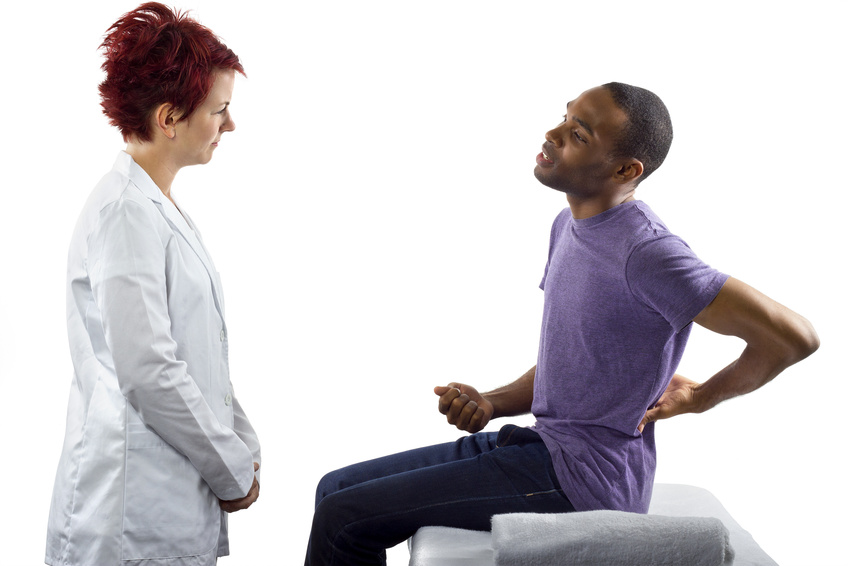
 Pain is something that many Americans live with every day. In a survey conducted by the National Institute of Health Statistics Survey, respondents said that back pain was the most common (27%), which was followed by migraines or severe headaches (15%), neck pain (15%), and facial aches and pains (4%). In some cases, the pain may become very chronic and hard to treat. If the relief of pain cannot be achieved through the typical treatments for pain — medications and exercise — some chronic pain patients receive